Normally I don’t blog about super personal information, but I’m in the mood so why not.
This last week I developed a blood clot in my leg. It’s a superficial one and responding quite well to basic home treatments, so I’m not very likely to die (though it is still painful). Honestly, I’ve known for my entire life that I inherited poor circulation in my lower extremities, but I kind of assumed it would never amount to anything worse than chronically cold feet. At least while I’m still in my 30s, you know? But blood clots does explain why I would periodically get fingerprint-sized bruises in random spots on my legs.
The event managed to hit me right in the emotions.
Unfortunately, a few days prior to this happening, my husband commented that I’ve been getting a lot of migraines lately, and I had an “Oh shit” moment. A number of things that I had attributed to a combination of stress and sleep deprivation could actually be signs of mini strokes, so I’m pretty freaked out. If I’ve been getting blood clots in my legs, then there’s a chance of getting them in my brain. I do not want to have a stroke and turn into a vegetable. I like being the way I am, and using my mind as much as I do. Everything I want in life revolves around being a functional person.
Angst angst angst.
At the very least, I did let a few of my usual habits slip over the winter, so hopefully getting off my butt and back into daily exercise in will help improve my health, with a strong imperative of “DON’T BE LAZY AGAIN.”
I am not remotely thrilled at being prone to this sort of problem.
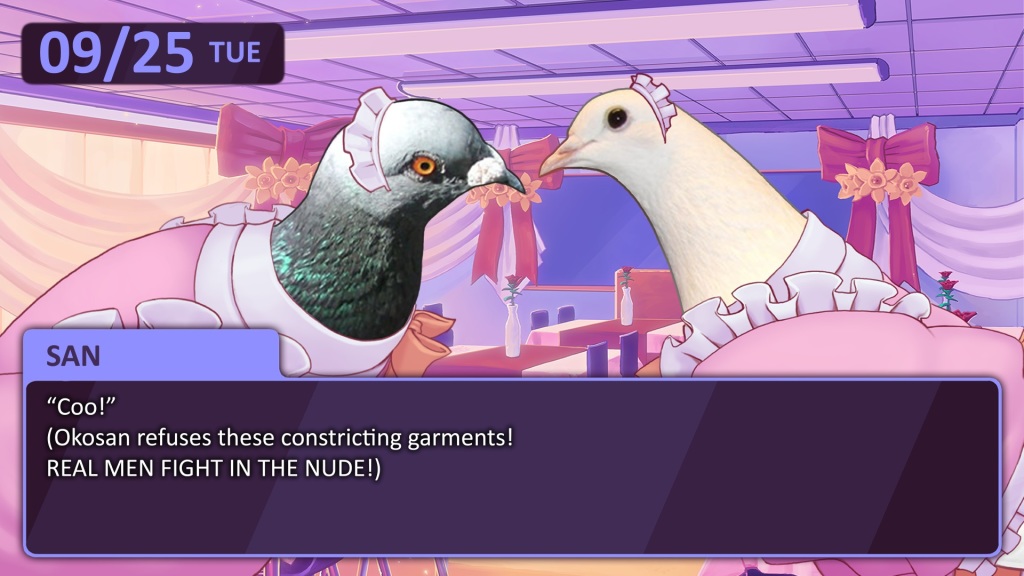
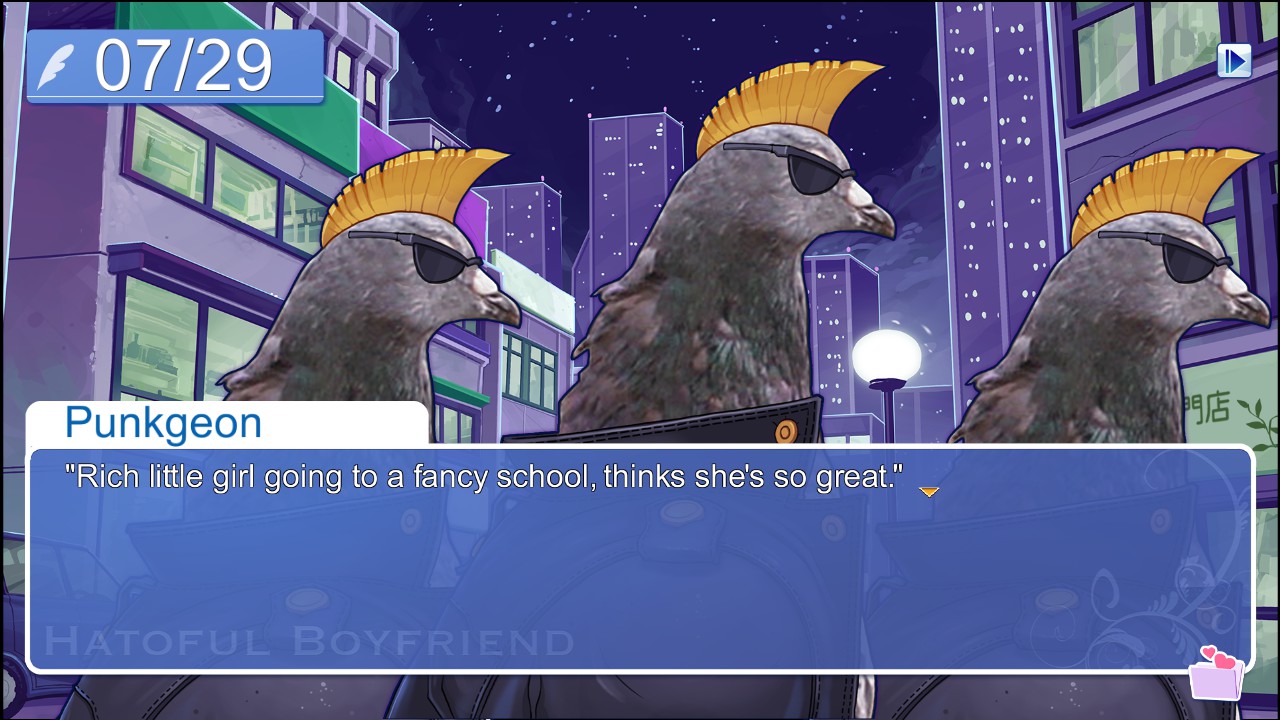
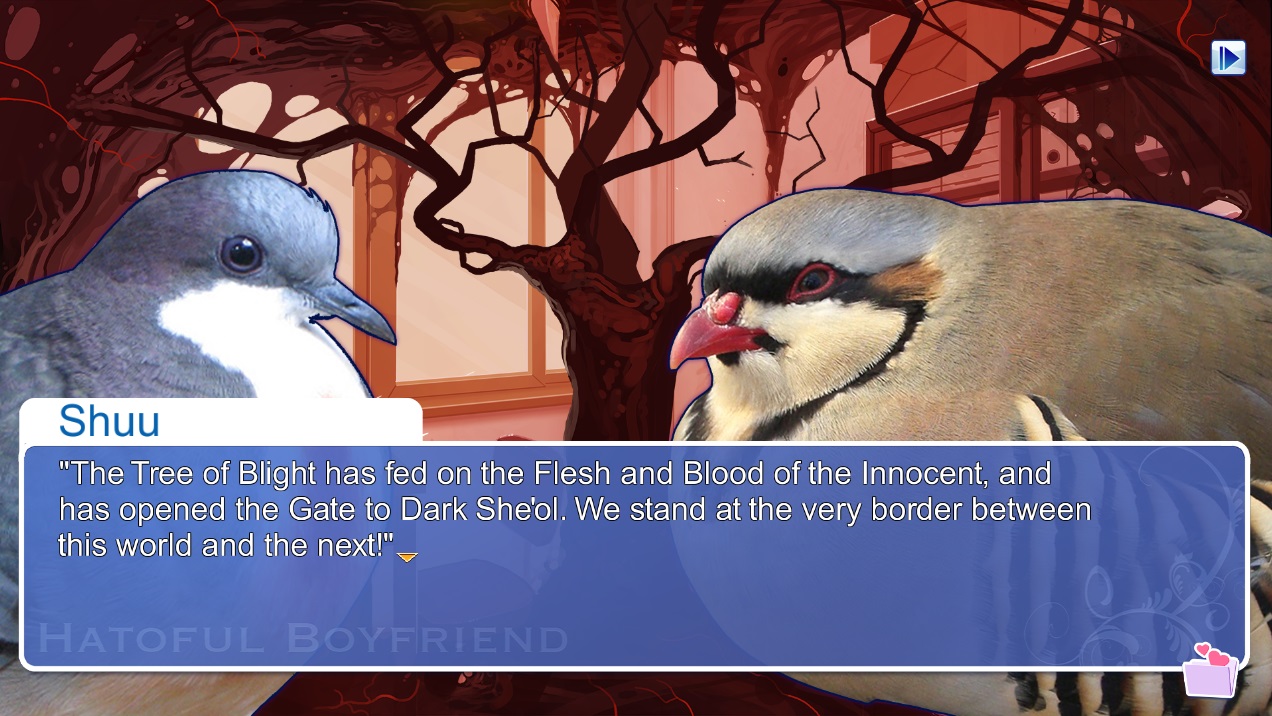
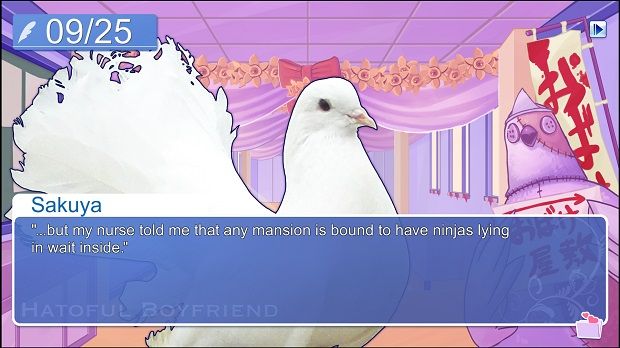
One of my most favoritest video games of all time is Hatoful Boyfriend, which is a categorized as a ‘dating simulator.’
Plot twist: You play as a human girl in a post-apocalyptic world that is dominated by hyper-intelligent birds. The puns are egregious.
And it gets weirder from there.
I know, I’m a strange person for loving the heck out of this game.
Which reminds me that I wanted to make a “Hatoful Boyfriend” shirt for myself…
Anyway, this game is what got me thinking that it would be a lot of fun to write a visual novel, especially because decent portions of it are spent reading events as they happen, rather than any per se ‘playing.’
I’m getting pretty excited over the idea of turning The Scion Suit into an interactive visual novel. I’m not planning on doing any art, at the moment, but exploring all of the ‘what ifs’ is … AWESOME.
And honestly, it’s a relief to be back in the realm of fantasy/sci fi writing. I missed it.
I also need to give Hatoful Boyfriend another play through, lol.
I often think to myself that I ought to treat writing more like a part-time job than a hobby, and make some adjustments to our routine so I can write in the mornings when my mind is sharper. The benefit is that I’ll be able to work much faster than I currently do.
I’ve given myself the goal of publishing a new novel every year, which is a perfectly respectable pace all told, and in that regard I think that I’m doing just fine. But I’m also interested in exploring creative writing in different formats, and that’s going to take up more time. A lot more.
Which means that I need to manage my time more efficiently.
Which is a bit of a trick with a 10-month-old crawling all over me. >.<
So, in addition to writing novels, I’ve decided that I want to turn The Scion Suit into a text-based game. i dunno why im such a nerd. That means writing a multi-pronged script, and learning basic programming (which has my husband tickled). You’d think that I have enough going on, but writing the script for a video game is one of my bucket-list items, and there’s no time like the present. We’re probably not going to be spending every weekend at the pool this summer anyway.
Besides, as long as I stick to the adage that “Progress is progress,” even just an hour a week will eventually add up. I’m pretty certain I do everything in 10-20 minute increments.
So I plan on starting off with a “choose your own adventure” format, but I want to get stats worked in as well.
I’m also looking forward to when the New Pokemon Snap comes out at the end of the month, so I’m probably going to have to quit watching movies and youtube. Frank James will just have to continue on without me. XD
The rule, “Show, don’t tell,” originated with the theater. Instead of having a narrator standing on the side of the stage loudly announcing that Aunt Martha is a mean #$%&, it’s far better to portray her with aggressive body language and a sour face.
However, somewhere along the way, the rule was applied to written fiction as well. Fact is, it’s pretty stupid as a rule for writing.
When your medium is words, you are literally telling everything.
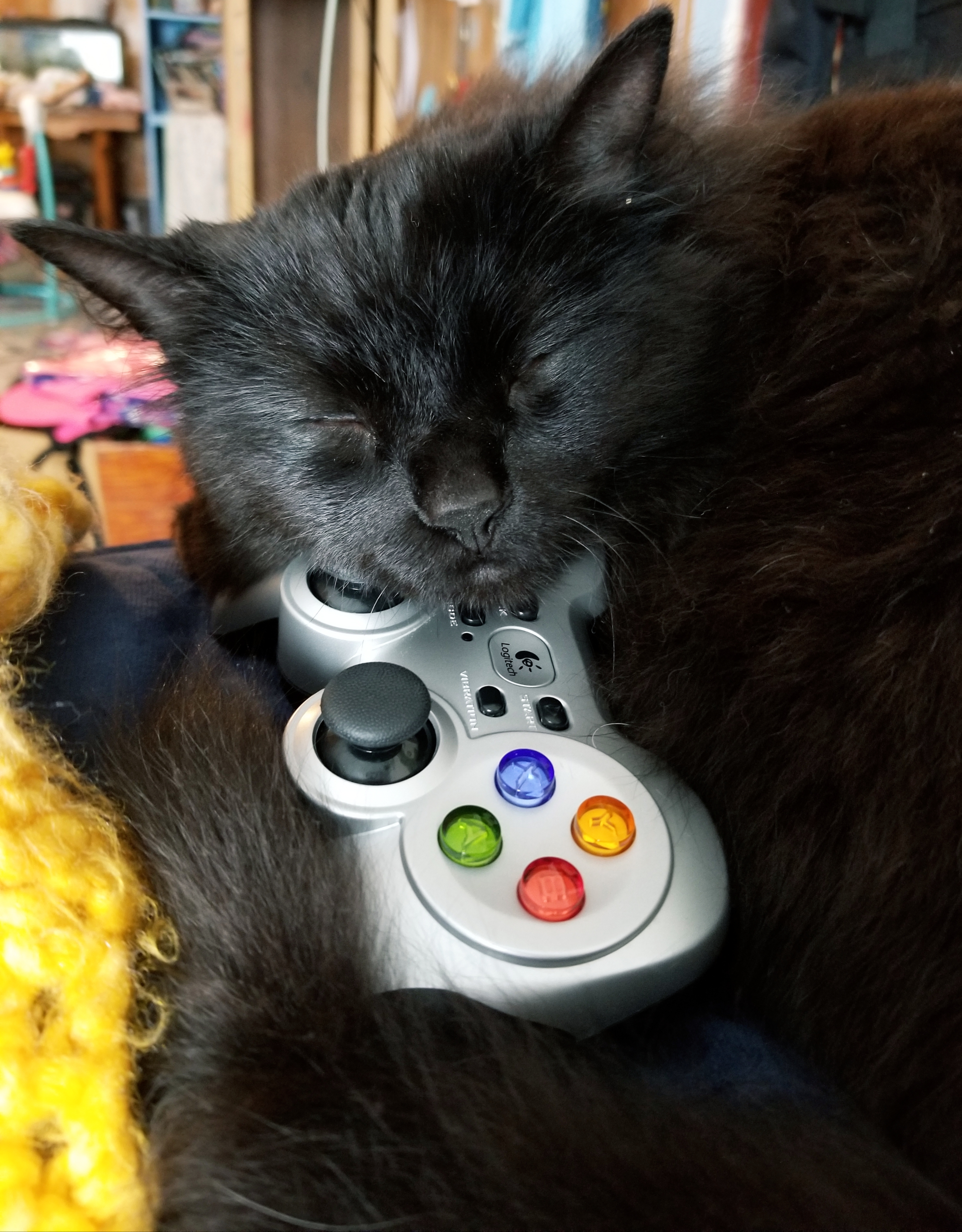
To illustrate my point, I’m going to show you a picture:
Yep. Pretty awesome.
…
The visual part of your brain interprets that the picture is a photograph of a black fluffy cat sleeping on a game controller. There’s something knitted with bright yellow yarn on the bottom left, and the background has child-clutter, bookshelves, and even a fish tank. How ’bout that.
That’s show.
It works with theater, because the audience is watching actors, costumes, and props in front of them. The appropriate parts of their brains are lighting up to make all the correct interpretations of what’s going on.
Reading activates a different part of your brain, and to put it bluntly, not everyone has a good visual imagination to properly construct a scene that’s described to them with words. When I say, “fluffy black cat,” instead of picturing anything like the photograph above, their imagination is going to construct something more like this:
Stick legs
Or maybe their visual imagination is REALLY bad, and this is the best they can manage:
Instead of imagining a vivid scene with a real cat that’s doin’ stuff, they’re going to find themselves bored with the descriptions. It doesn’t matter how detailed you get, or how poetic you wax, it just isn’t going to do it for someone who can’t visualize that well. Chances are, they are far better at hearing the words, than seeing the scene.
Now, I’m going to tell you about that cat:
His name is Nyx, and yes, he was named after the goddess even though he's male. We rescued him and his sister when they were six weeks old, both very undersized and malnourished at the time because of untreated intestinal worms. We got them the necessary veterinary care, fed them lots and lots of kitten formula, and generally loved them into being healthy, energetic kitties. Nyx isn't fond of anyone other than me (which my husband considers to be a great betrayal), and he's got one of the whiniest meows that I've ever heard, but he likes to snuggle up with me and suck on my blanket when I'm lounging on the couch after the children have all gone to bed. He's the one I consider to be my animal familiar.
Now it doesn’t matter if your visual imagination can’t construct a vividly detailed picture, because you can piece together the information that I told you about his history and personality to construct an idea of what sort of cat he is. You get a lot more abstract information than the photograph gave you, and the irrelevant stuff is completely filtered out (I know, you were just dying to learn about that yellow yarn).
Here’s what I’ve discovered: People who have powerful visual imaginations are going to ‘see’ a scene or a character even if you don’t describe very many physical details. It does a pretty good job even without the purple prose.
But those who are better at hearing are often left in the dark, so to speak. Writers don’t play with things like alliteration or rhymes in fiction anymore, as they are far too busy trying to “show” everything to someone who may or may not be able to appreciate it. They don’t pay attention to the way the story sounds.
Because your audience is reading a book and NOT watching a movie, pay attention to the way the syllables and consonants flow. Read your story out loud to give yourself a chance to hear it.
Go ahead and tell your audience that Aunt Martha is a mean #$%&. Have that be the first sentence of the story, and spend the next few paragraphs telling everyone why. Imagine Morgan Freeman is narrating, or Vincent Price. Don’t be afraid to have a strong voice as an author.