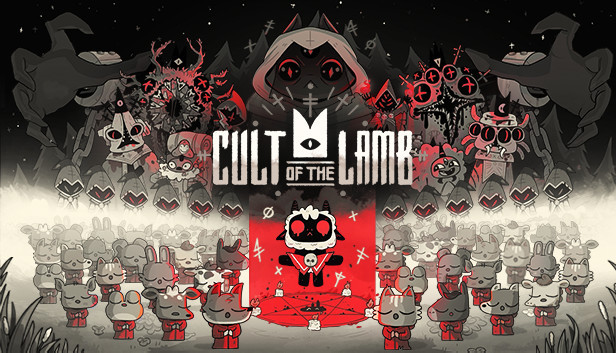
Been playing lots of this in my spare time, because it’s exactly the sort of game that I just eat up, lol. #I’maweirdo
An author's collection of thoughts and stories
Been playing lots of this in my spare time, because it’s exactly the sort of game that I just eat up, lol. #I’maweirdo



Whenever we go to the grocery store, our last stop is always the snack aisle for the kids to pick out a little treat, provided that they’ve earned it with good behavior, of course.
Someone else needed to pass by us, so I urged the kids to make room for her to get through. She smiled and said, “You’re so lucky to have a lot of kids.”
Ten years ago when we had our first baby, the general attitude from strangers was the complete opposite — a constant stream of criticism and judgment. Heck, even my health care providers for my prenatal checkups took it upon themselves to lecture me about the virtues of birth control, and treated me as if I had committed some great failure of responsibility. I felt as if everyone in the entire world hated fertility.
All of a sudden this year, I’ve had multiple people say that I’m lucky to have six kids. It’s weird, but refreshing.
I very much feel lucky. It’s been so delightful to watch my babies grow and interact with my smaller babies. I think the best part of life is having people to love.
byautumnrain.com


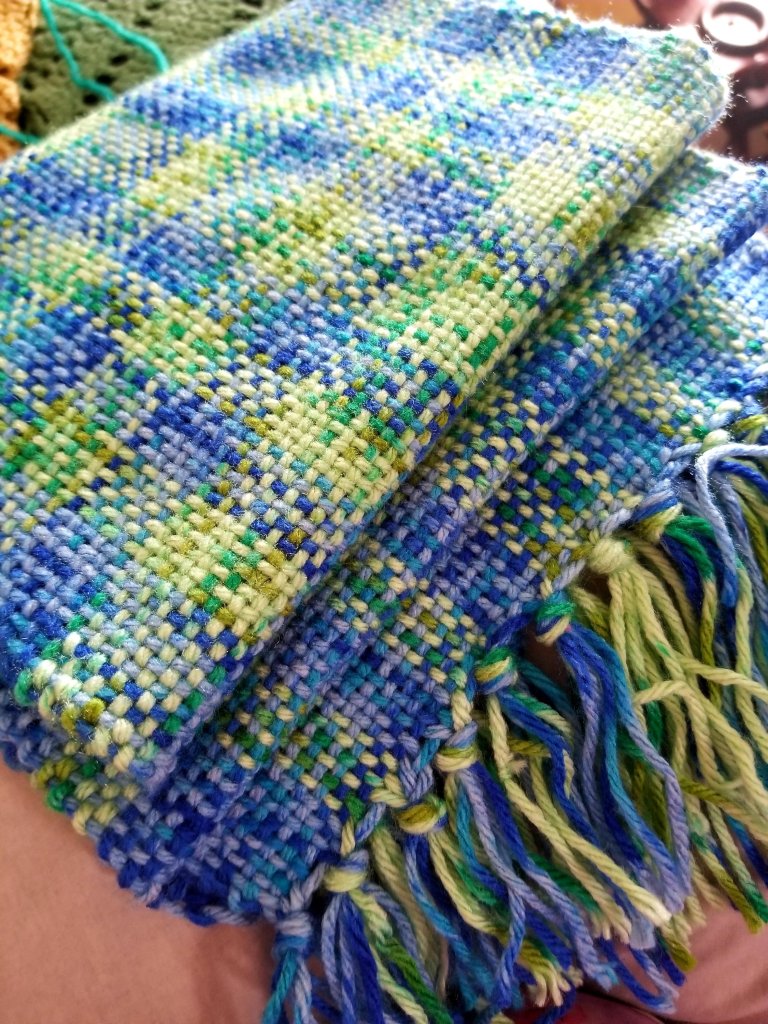
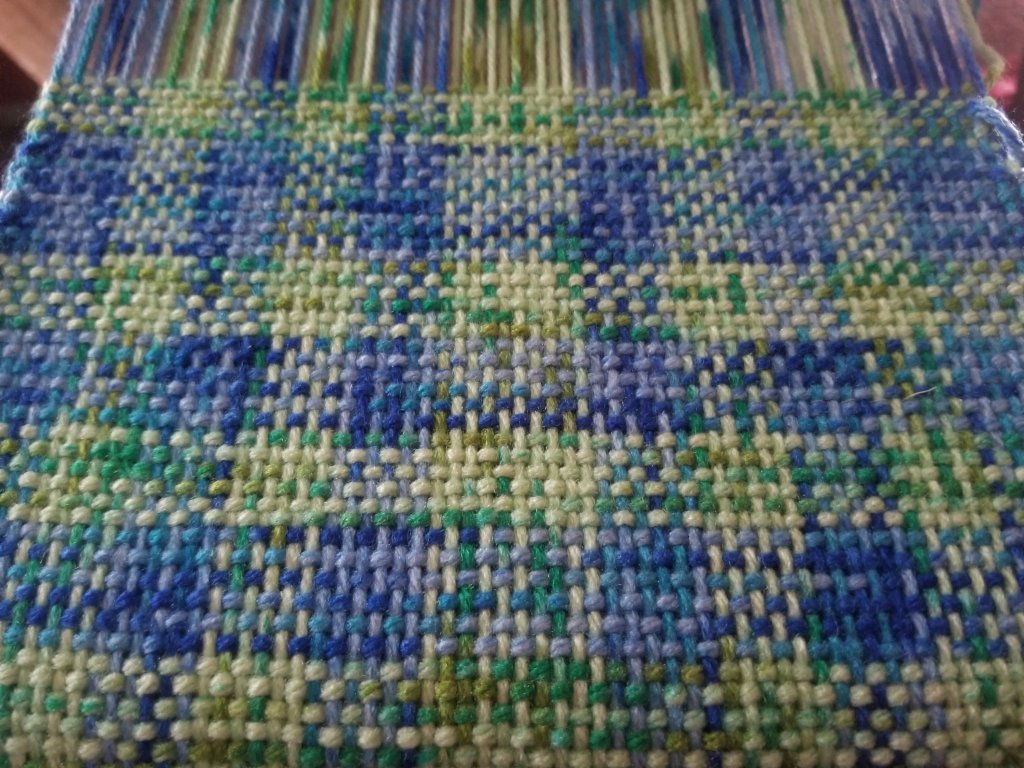
I made this scarf for my son.
I used acrylic yarn, because I know better than to hand anything made out of nice wool to a six-year-old.
The speckled colors make me think of crayon drawings. 🙂

Hartmann waited for Carol out on the running track, smiling slightly when she came through the doors and squinted at him through the sunlight. The corporal was still with her, so the first thing that Hartmann did was dismiss the soldier, to ensure that they would be alone. She was nervous as the corporal left, so she bit her lip as her eyes locked onto the ground, and the action made her look younger and more girlish.
He had to find his tongue before he could say, “We’re going to run a mile to start.” It was hard to describe the effect that Carol was having on him. She wasn’t feisty like the women in the military, nor did she try to act sexy like the women at the bar. She was something else … something unfamiliar.
Carol nodded and murmured, “Yes, sir,” with her eyes still pointed downwards. Her hands tightened into fists.
“Relax, I’m under orders to be nice to you.” Hartmann smirked as he added, “And remember to call me master sergeant. I’ll let you off this time because you’re a civilian.”
“Yes, sir … master sergeant.” She glanced up, met his eyes for a split second, then looked away.
“Go on, get moving. It’s four laps around the track.”
Hartmann was silent as they jogged the first lap, giving Carol time to get used to his presence and feel more at ease. He watched her out of the corner of his eye, noting that it didn’t take long for her to begin breathing heavily, and compensated by slowing down the pace. When they started around the curve again, he said, “I’m sorry for being a dick.”
Carol didn’t reply, but he had expected that.
“Everyone knows I’m a real asshole to be around …” He feigned sheepishness, though inwardly he winced at his own words. He hadn’t even begun to get rough with her when she had jumped into the Suit, and if given the chance he would show her in a heartbeat just how much of a jerk he could be. However, at the moment he had a goal, and he wanted Carol to relax and open up to him. “I especially get a little crazy about the Suit.” That part was true.
He was quiet again, studying her closely, doing his best to read her thoughts through her body language. Her face flitted through a number of micro-expressions, enough to tell him that the inside of her mind was no where near as empty as her exterior, but it was going to take more time to be able to read her accurately.
“Master sergeant,” she said hesitantly as they began their third lap at an even slower pace. “Do you know what the visor is made out of?”
“Not a clue. I’d guess something similar to leaded glass, but I don’t think the minerals used in it came from this planet.” Hartmann stopped and grinned at her. “You noticed, didn’t you.”
“Not while we were inside.” Carol placed her hands on her knees as she huffed. “But when I had the Suit out in the sunlight, it was like seeing the world for the first time.”
“It’s amazing, but it’s something that you’re going to have to get used to. Those new colors have an odd way of swirling together and causing vertigo and nausea once you get moving fast enough. That’s going to matter during combat.”
She looked away. “Am I supposed to go into combat?”
“I’m not cleared for that information. I was told to train you, so that’s what I’m doing.” Hartmann was eyeing Carol up and down again. “In the military, you follow orders without question.”
“I guess that’s something we have in common,” she blurted, then bit her lip shyly as she began walking again.
Hartmann was momentarily lost for words as some sort of electrical shock pulsed through his chest. A feeling started to form inside his throat, then hardened into anger. How dare the cleaning lady suggest that they had any commonality – he was a hero, and she was a nobody. She was only there through some unexplained fluke, because some computer inside the Suit had called her “commander.” If not for that, her place would be in the shadow of his glory, unnoticed as she maintained the Suit for him.
He walked beside her, neither of them bothering with the pretense of jogging, until he regained himself and a quip came to him, “I saw the employee file on you, and it said that you’ve always been the picture of good behavior. I bet your parents loved you for that.”
Carol shrugged. “I guess they would have.”
“Would have?” Hartmann prodded.
“They died when I was three.”
He frowned. Carol didn’t look like the sort who carried childhood trauma, and she had delivered the news so blandly that it would have better suited a conversation about the weather. “How?” he asked, not out curiosity about the answer, but more for the opportunity to gauge her response.
“House fire.” Carol looked over at him and met his eyes. “I nearly died of smoke inhalation as well.”
“That is surprisingly interesting for you.” Hartmann cracked a grin. “I would have guessed that you grew up in some ordinary middle class family, did all of your homework and managed mostly B’s in school, then graduated and decided to twiddle your thumbs until you died.”
She scowled, finally annoyed by something. “No. I grew up in foster care, and got myself emancipated at sixteen. I got a GED instead of graduating, and I’ve been working full time ever since. I am not twiddling my thumbs.” A shadow of doubt crossed over her eyes, as if she was second-guessing what she had said.
“Foster care, huh? Dark place, isn’t it.” For a moment Hartmann felt the impulse to reach over and place his hand against her shoulder, to feel the crook of her neck with his fingers, but he tamped it down and kept his hands by his side.
“I survived.” Her mouth twisted downwards. “By becoming invisible.”
“That explains the great mystery of the cleaning lady,” he said smugly. “I should have guessed there was something tragic lingering behind that pretty face of yours.”
Carol stared at him, her expression blank. Then, abruptly, she began jogging again, her hair bouncing as she pulled ahead. Hartmann picked up the pace as well.
“Since I know that you’re wondering, but are too shy to ask, I grew up in some ordinary middle class family, but I got straight A’s, and was the captain of both the lacrosse and swim teams,” he said conversationally. “Then I enlisted when I was seventeen … to kill people.” Hartmann laughed at the series of expressions that flitted across Carol’s face when she glanced over at him, then added, “I had to get out.”
“Doesn’t sound like it was that bad,” she murmured.
“It wasn’t. It was so normal I was suffocating,” he replied.
Hartmann continued to study Carol, piecing together what he could about her from the small bits that she had told him. There was something off about her, some essential part that was either repressed or incomplete, that enabled her to speak almost monotonously about her past traumas. It intrigued him.


The endless echo
Of lightning tearing the sky
Wondrous thunderstorm
Brilliant yellow
Filling the air around me
A sunset sublime
The prettiest smile
Fills my heart with endless love
On the smallest face
My dearest baby
I love you so very much
Please let me sleep more
Swimming every day
Keeps me so healthy and strong
The water feels great
byautumnrain.com

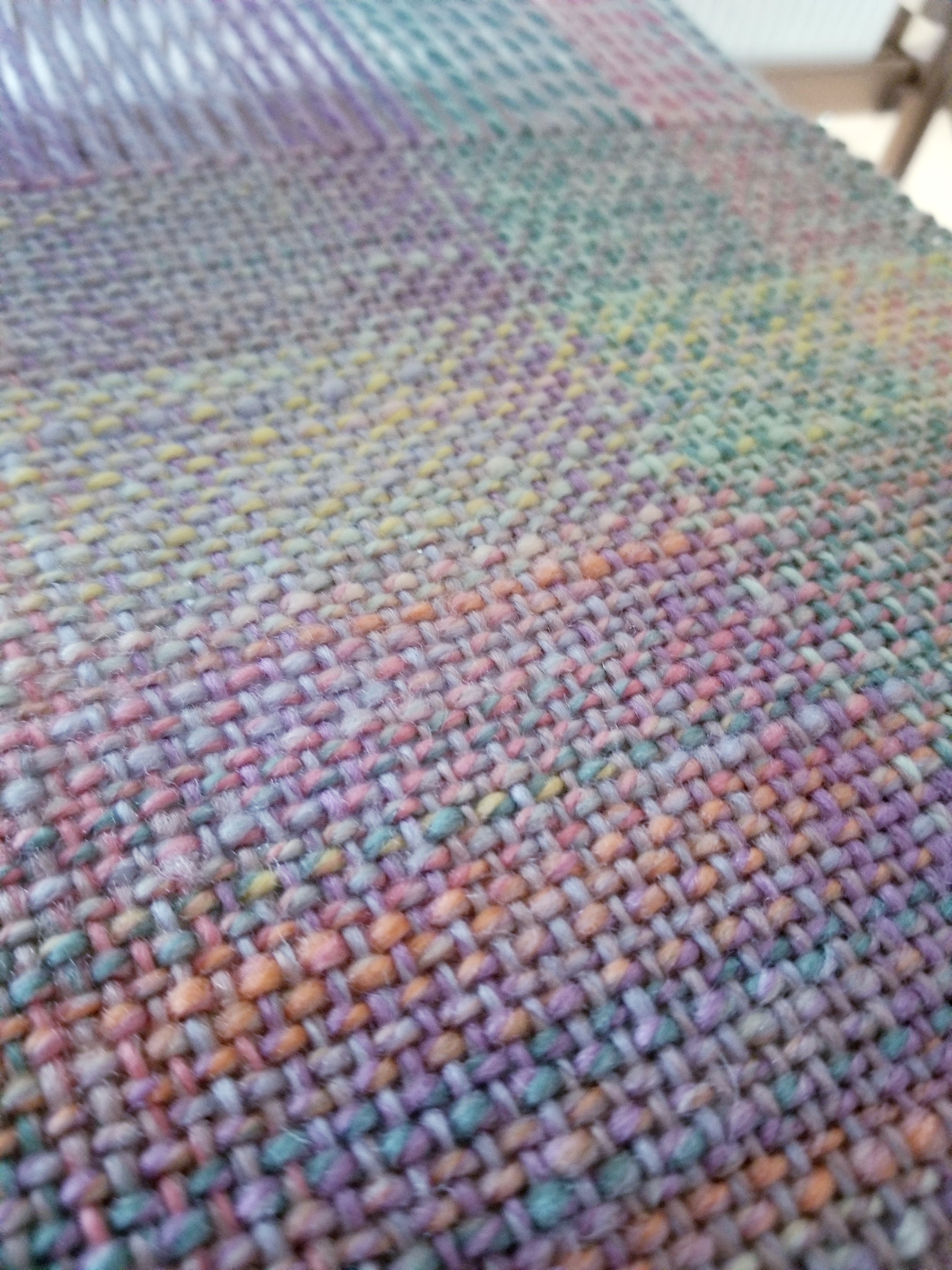
As I’ve been learning how to weave, I very quickly came across the axiom: “THEY say that you can’t weave with handspun yarn, but THEY are wrong.”
And instead of scoffing at THEM for being judgmental and stupid, I was immediately all, “Who are THEY and why do THEY say that?” For some reason, people don’t seem to like me much, lmao.
Through research, I learned the truth. Good for me.
In terms of personal weaving, you have basically three types of looms: Inkle, rigid heddle, and shaft, in order of complexity. All three of them work by putting vertical yarns (called the warp) under tension and weaving back and forth horizontally between them (the weft). With inkle and rigid heddle looms, you can definitely use handspun yarn for both the warp and the weft: if it can be tensioned, it can be used (side note for “sticky” sheds that I’m not getting into right now).
Now, I haven’t used a shaft loom — they are expensive, and I’m just a poor sod surviving in the midst of an economic crash/the end of the world. But, the word on the street is that they are quite harsh on the warp threads.
So, THEY were talking about shaft looms, where you are much more likely to break a warp yarn through friction. Heck, THEY even recommend using a humidifier when working with linen because it’s stronger when wet, and we’re not kidding around here.
And it’s rather disingenuous to act like the advice was intended for rigid heddle looms, purely for the sake of appearing smarter. Just sayin’.
Now we’re all enlightened.
byautumnrain.com

Let me go into more detail about what I said here.
Okay, so if every post gets 10 views, obviously posting once a week will result in a total of ten views, versus posting every day will get 70 views. The increase is purely because of more posts.
However
My experiments with WordPress actually showed that a longer posting streak will increase the number of views each post gets via the WordPress Reader.
sO
Continuing with our 10 views per post example, that number will increase to 20, 30, or 40 views per post. Instead of ending the week with 70 views, you can end with 280. Also, older posts are more likely to get views as well.
bUt
These views aren’t coming from actual real live loyal readers. When you stop posting Every. Single. Day. your stats will plummet, and you have to start all over again. Dead internet, baby.
One of my favorite games is Swarm Simulator, which I like to joke is the pure essence of gaming without any of the filler crap like graphics or plots. The whole point is to watch the numbers get bigger. And bigger. I dunno why, but it’s kind of addicting.
I’ve decided to spend awhile playing the same sort of game on WordPress.