About Writing

Lovecraft Quote

The convention of assumed pity spilt mawkishness on his characters, while the myth of an important reality and significant human events and emotions debased all his high fantasy into thin-veiled allegory and cheap social satire. His new novels were successful as his old ones had never been; and because he knew how empty they must be to please an empty herd, he burned them and ceased his writing. They were very graceful novels, in which he urbanely laughed at the dreams he lightly sketched; but he saw that their sophistication had sapped all their life away.


“The Silver Key” by H.P. Lovecraft

About Writing

Nauseous vs Nauseated

The other day out of desperation, I ate Real Food for lunch, then promptly had to make a run for the toilet. Lawlz.

Fortunately that seems to have been the worst of my morning sickness (knock on wood). Yesterday I managed to eat an ENTIRE baked potato. Oh sure, it was a small one, but I still ate the WHOLE THING. Victory!

My official opinion at this point is that it is way harder to be pregnant in my 30s than it was in my 20s.

So

Something that has irritated me for years and years now is that everyone misuses the word ‘nauseous.’ I mean EVERYONE.

When something is nauseous, it makes people want to throw up. For example, “The nauseous smell of rotten fish permeated the air and caused everyone to turn green.”

If you are nauseous, that means that you make everyone around you want to vomit. Maybe you haven’t practiced any sort of hygiene for a year. Maybe your personality is just that bad.

Nauseated is when you want to throw up yourself, probably because you’re trapped in a small room with the nauseous person and have no escape.

Understand?

Because every single last one of you is misusing ‘nauseous’ when you’re supposed to be saying ‘nauseated.’ It’s not your fault, because the misuse is so ubiquitous that you have no clue that it’s technically wrong.

NAUSEATED.

Not nauseous.

NAUSEATED.

Consider yourselves schooled.

About Writing

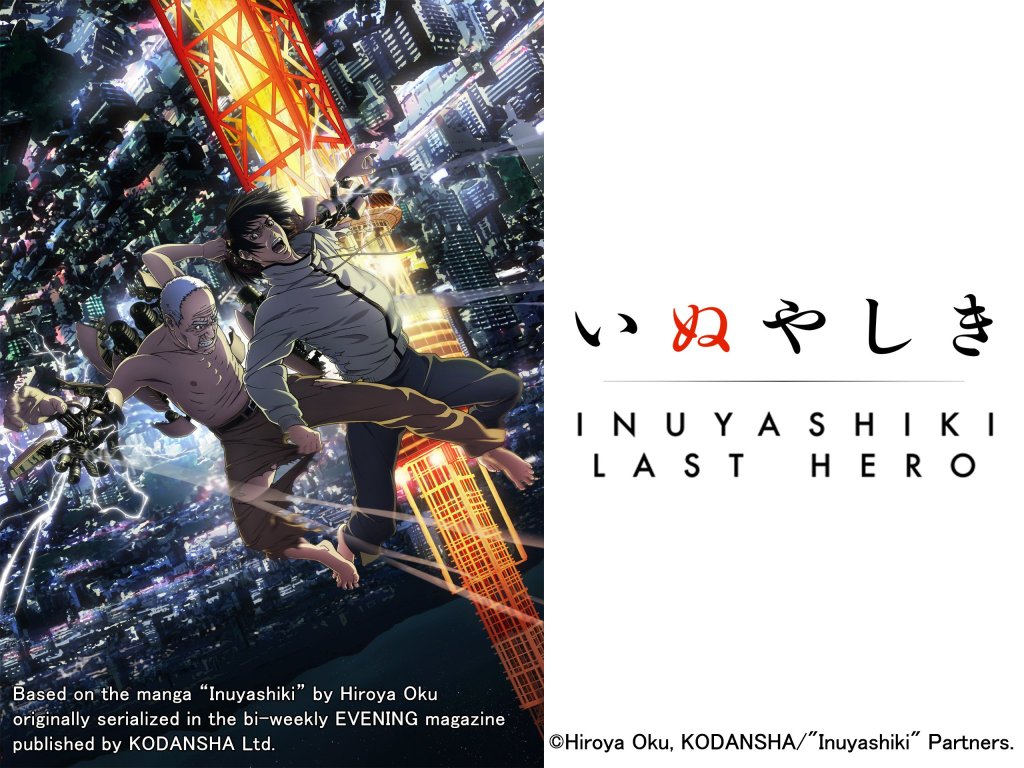
Inuyashiki

91BhSfBgc7L._RI_

I used to be a big anime geek when I was a teenager, and watched far more series than I care to admit to. I grew out of it after a few years, mainly because I got burnt out on most of the stereotypes and tropes — anime just got so anime, if you know what I mean.

I still watch it every now and then when the mood strikes, which is how I came across Inuyashiki Last Hero.

This is definitely a “after the kids have gone to bed” sort of show.

The basic plot is that 58-year-old Inuyashiki and high school student Shishigami are accidentally killed by inter-dimensional aliens, who replace their bodies with highly advanced combat robots to cover up their crime. Hilarity ensues.

I’m bringing this up because of the characterization of Shishigami was particularly noteworthy. He’s the main antagonist of the story, and the audience sees him do some pretty evil stuff. There’s no doubt that he’s a sociopath who is incapable of empathizing with strangers.

However, he’s not *all* bad. When he cares about someone, he deeply cares about them. More than once, he tries to quit doing evil for the sake of his loved ones, then gets pushed back into it when his loved ones get unfairly hurt.

It creates a genuine conflict in the audience. On one hand, you want to hate him because you see him do really terrible things; on the other, you can’t help but feel that some of his acts were justified. Not all, mind you, but definitely some. He would have settled down into helping society instead of hurting it, if society had been capable of leaving him alone — the audience knows this, and can’t help but feel bad for him because he’s demonized so thoroughly that he can’t change despite his best efforts.

The anime turned out to be a thought-provoking departure from the usual stereotype of the evil antagonist.

So the next time you sit down to start writing a novel, don’t be afraid to humanize your villain. It’ll be a change of pace from what everyone is used to.

About Writing

Terrible Reader

I confess that I’m a terrible reader. Every time I pick up a book, I think, “This time I’ll read every word,” then sooner or later, I get bored and start skipping through.

“Why is the author taking so long to call the wagon green?”

“Meh, sex.”

“Okay, this character is stupid.”

“We get it already, they had a good time at the picnic.”

When I read out loud to the children, I adopt that bored, “Let’s get through this massive paragraph as quick as possible” monotone voice, and I’m afraid it’s pretty obvious that I don’t enjoy it.

It always feels like there’s a huge number of words getting in the way of the story, and I can’t remember the last time I found a book engrossing. Sometimes I could swear that authors actually want readers to skim over half of the novel, and throw in lots of filler just to look more impressive at first glance.

“In my book, it takes 800 pages for fifteen characters to make a single grilled cheese sandwich. It’s rich with subplots about running out of bread, taking bathroom breaks, and even falling in love. I also included numerous philosophical discussions about the merits of cheddar versus colby jack, and the different methods of toasting the bread. I included lots of poetry. There’s even a surprise plot twist where it turns out that half the characters are actually grilled cheese sandwiches themselves! The novel ends after the characters burn down the house and die because they tried to make it in the toaster.”

Oh wow!

No way!

The funny thing is, when I read my own stories with the same method I use to read other novels, I do get the whole, “WOAH this story is progressing crazy fast!” feeling. My style really isn’t best experienced by charging through. I do always “test read” my stuff before putting it out there, and following the natural flow of my mind without trying to speed up or edit anything feels good to me, so that’s how I keep it.

I skip writing the stuff that I skip reading. Which is a lot. But hey, that also means that there isn’t anything for you to skip over either, because I’m probably WAY worse than you about that.

Lol.

About Writing

Writing Lessons from Bob Ross: Embrace the Process

Sometimes I like to turn on Bob Ross to absorb how calm and mellow he is, and I find it relaxing to sit and watch him paint for a bit. Children are highly chaotic entities, so I know how to appreciate the change in pace that comes with everyone sitting together watching a show that we can all enjoy.

It occurred to me that one could also learn how to write from Bob Ross, as long as you think metaphorically.

He doesn’t simply slap down blobs of color and call it done. He blends the paint, adds shadows and highlights, and is mindful of the details. He also doesn’t overwork the paint or try to control every single aspect of the picture, instead working with the textures of the brush strokes and allowing elements to evolve naturally.

And, as everyone knows, “There are no mistakes, only happy accidents.”

A lot of writers stop at the blobs of color phase. They’ll free write whatever passes through their minds then hit ‘publish’ without any more thought about the story. These sorts of writers can produce a lot of content in a short amount of time, but it will all feel unpolished and unsatisfying. Often, when I have tried to explain how these writers have good potential but they need to dedicate more attention to reworking their story, they get upset rather than accepting the advice (even when I’m responding to their request for criticism). So, remember, blobs of color are your foundation, but they are not your finished story. The first draft should not be your last. And no, your blobs of color are not more genius than anyone else’s. They all pretty much look the same.

Others will overwork the story to death. They’ll edit out the spontaneity of adventure, and reduce their characters to props who serve rigid roles, instead of letting them shine as quirky individuals. These writers don’t let the overall picture evolve naturally, and their stories feel formulaic. While they are often well intentioned, they don’t know how to let the story flow on its own.

There are also writers who put in too much detail, and create overly-busy stories with no clear focus. They forget to leave the background in the background. They throw too much information at the reader all at one, or create more characters than there’s room for. They describe the condiments instead of the picnic.

When you are in the process of editing, take a step back and try to visualize the story as a painting. Is there enough detail without being overdone? Did you let elements evolve naturally and follow the flow? Did you flesh out the foreground and leave the background appropriately hazy? Is it something that you would hang on *your* wall? Remember, you can always fix it.

And the next time you watch Bob Ross, just imagine that he’s speaking in metaphor and soak in all of his encouragement.

About Writing

Embrace Your Creative Freedom in Fiction Writing

I often think that the problem with contemporary fiction writing is that there are too many rules to contend with. Writing communities are stiff with them. People constantly ask for help with them and enforce them on others. Most of the time, whenever someone asks for a critique, it boils down to, “Am I following the rules properly?”

What about creative passion? Idealism? Soul expression? Where do those fit in?

Why do people ask, “Is this something that others would read?” instead of, “Is this something I care deeply about?”

When it comes to writing, the single most important thing is to have fun. Enjoy it. Randomly burst into laughter because you thought of something funny to write while waiting in line at the grocery store. Cry when your characters are sad. Ride the roller coaster of emotion that comes from being a writer, and revel in the intensity of life. It can be so blissfully wonderful.

Tell as much as you want instead of showing it. Use the word ‘said’ exclusively. Describe everything with adverbs. Neglect world building. Write only subplots. Use your favorite cliches. Include funky colloquialisms.

Just be you.

Don’t copy someone else. Don’t seek out everyone else’s approval. Don’t slavishly follow rules and formulas because someone wrote an article about it. Don’t follow bad advice from the internet.

Figure out what you like, and do it. Perfect it. Develop a strong voice and your own unique style.

I believe that there’s an empathic transfer that happens between author and reader. If you aren’t madly head over heels in love with your own story to begin with, then no one else will feel that way either. If you don’t care, then no one else will care.

And besides,

You can’t please everyone.

But you can certainly please yourself. So isn’t that where you ought to start?

(And yes, I know I’ve written a similar post before, but exposure to writing communities always puts me on this train of thought)

The Scion Suit

The Scion Suit – Behind the scenes

I know, everyone is all like, “Oh my god, she’s beating a dead horse! The story wasn’t that good.”

But ha ha! I intend on turning this horse into GLUE! The only escape is to stop reading my blog, bwahahahahahahaha!

Actually, I’ve had a really crazy week, and now I’m coming down sick/loopy from the stress. Hoo-rah!

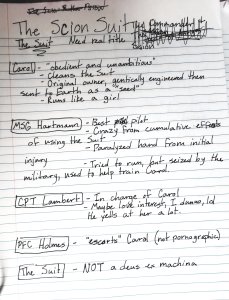
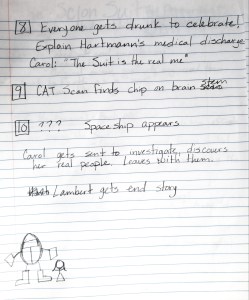
ANYwho, some of my personal notes on The Scion Suit:

20190926_121210397160519410447894.jpg

20190926_1216053380433230943461363.jpg

I changed a few things for the final version, but you can probably see how things evolved.

Not pictured: Research into military rankings and culture. This was the hardest part for me; I didn’t want to be blatantly wrong, but the only personal experience I have is a handful of conversations with a couple of ex-military guys. I’m not actually sure if Lambert would have had his own office as a captain.

Also not pictured: Lots of brainstorming with my husband. He’s my number one source of inspiration, meaning he comes up with the ideas and I steal them. Just kidding. He knows how to get my juices going. Lol.

Why did I choose that particular prompt?

My method is to sort by ‘new’ then keep scrolling until I find something that stands out to me, and ignore popularity altogether, because I’m an arteest and not an attention whore. I picked that prompt because it reminded me of a reoccurring dream that I’ve had several times over the past few years, and I very nearly wrote the dream as my response. However, I very quickly decided that the dream deserved the time and attention that I put into my novels, and opted to come up with an entirely new story instead. The dream was still a major influence.

Then the prompt got popular. Whoopsie.

So there you go.

About Me

Pervy

Like a lot of creative sorts, I have a pervy streak. Nothing that would shock grandma, but… you know, tee hee.

I always hold back, however; I have turned off countless movies and shows because of “3 edgy 5 u” sex scenes. Usually I assume that they’re trying to cover up how much the story sucks by distracting the audience with bouncing titties, especially if it happens during the first 20 minutes. And why is it always casual sex? Srsly, not sexy.

Anyway, I think that it would be a touch hypocritical to publish sex stuff when I am so critical of sex stuff. I’m not going to resort to cheap tactics for the sake of attention.

Isn’t it nice to know that you can read through an entire story without cheap tactics being thrown in your face? I think so.

But then, I always have ideas, because I love writing romance and sex is a huge part of that. Lots of ideas. Things that would be kind of fun to say: THIS IS CANNON XXX LOL

Nothing that would shock grandma, of course.

So I wonder: keep it in my private folder, or share it?

About Writing

Word Count

Sometimes I angst about word count.

The way I see it, most people take forever to say absolutely nothing, so a novel with 90,000 words is going to be mostly rambling — it really shouldn’t take 1,000 words to say something that can be expressed in 10, but people do it anyway. I don’t read epic novels because of this.

I’m naturally a straightforward and concise person, so how people manage to put out so much filler leaves me baffled. How on earth do they manage to avoid getting to the point for so long?

However, reading is like listening to music, in the sense that it possesses a rhythm and flow. Sometimes I worry that my blunt phrasing leaves others feeling that the experience was too short for their liking. Yes, I made my point and told the story, but maybe I should have lingered on a few particular scenes purely for the sake of making them longer and more satisfying.

Like sex, for the analogy. Sometimes you want to play around and draw things out, instead of just getting right to the orgasms. Of course, sometimes its been a long day and while you want sex, you also want to get off quickly so you can fall asleep wrapped in post-coital bliss. Too long, and you start to go numb.

Though, I did read that intercourse lasts for only 6 minutes on average, so maybe that’s a bad comparison. I’m also deliberately trying to ramble, to see how it feels. It’s chaotic. Can’t say I enjoy it.

Maybe I should make my characters stupid, so they get into more trouble and generate more drama. And side plots. Hilarity ensues, and all that jazz. To help the readers feel like they’re hanging out more.

Or sex scenes. Because sex, lol.

I dunno.

I don’t want to be the sort of person who churns out epic novels, but I worry that I tend to under do it. I hope the fact that I’m focusing on e-books for cheap/free helps compensate for my blunt personality, though maybe it doesn’t matter as much as I fear.

I’m still not at 400 words. Good god, how do people do it? I made my point ages ago, came up with a titillating analogy, and now all I’ve got to go on is repetition.

Repetition.

Pointed repetition.

Reeeepeeetiiitiooooon.

Meh, I’ll never get there.


About Writing

World Building

Writing communities always make me feel like I’m the crazy, avant-garde person that everyone dismisses because I’m just so out there.

Crazy is a given. But avant-garde? I don’t think so. I always thought I was more old-fashioned in my approach.

There’s a hyper-focus on world building, world building, world building(!!!1) with fantasy and sci-fi. This is obviously inspired by everyone fantasizing that they are writing the next Lord of the Rings.

Me? I thought Lord of the Rings was okay. Not inspiring, but not a waste of time. Certainly not something I want to emulate. Definitely not something I want to endlessly reread with different clothing.

The problem with novels based on world building is that they are dry. The plot is painfully generic, and the characters are one-dimensional props that bounce from explanation to explanation; about how dragons are blah blah blah, and the king’s daughter is blah blah blah, and magic is blah blah blah. Maybe the main character is given an interesting ability, but then their personality is so stereotypical that no one can be bothered to actually care. Insert weird names like fah’ri and el’wes in a effort to make it more unique, but not really…

I confess that I quit reading high fantasy when I was in middle school. Never could develop the stomach for it.

My style is character-driven storytelling. Instead of drawing maps, I read books on psychology. I think about readability and flow. The plot is a natural extension of the characters, driven by their goals and personalities. I build just enough world to give the story a solid foundation, but I don’t think about it excessively. I don’t come up with enough material for a compendium by any stretch of the imagination.

So, while the topic of writing is something that I have put a great deal of time and consideration into, my fundamental approach is different from everyone else in my chosen genres. I’m crazy and different, and no one seems to know how to respond to me. Ha ha.

Maybe I’m even avant-garde.