Poets of the Fall – The Sweet Escape
An author's collection of thoughts and stories

I’ve been watching ‘Murder, She Wrote‘ in my downtime, and I’m currently halfway through season 2.
Occasionally I think that the main character, Jessica Fletcher, is too trusting. She hands high-priced items over to the police without ever once suspecting that anything less than honorable will happen to them, and she openly talks about her suspicions and plans to whoever happens to be nearby.
Of course, since it’s a TV show, she always has everything lined up perfectly whenever the bad guy tries to do bad things, and the day always ends with justice prevailing.
It annoys me deeply. Irritates. Vexes. Abrades. Perturbs. Etc.
Perhaps it’s a generation gap, or simply all too telling of many of my own experiences, but the amount of open trust without any negative consequences strikes me as implausible and naive. I want to grab Fletcher by the shoulders and shout, “KEEP YOUR MOUTH SHUT!” The world is a dark and evil place, and there’s a murderer in your midst. Keep your wits about you, and maybe if you’re lucky you’ll survive into the next episode.
But that’s not the world portrayed in the series. That world is comparatively innocent and unrelatable for me.
That said, I do very much enjoy the episodes about writer culture. Them’s fun.


My Venus is in Pisces, which is the astrological way of saying that I’m the quintessential hopeless romantic. This was not a personality trait of mine that was ever supported during my formative years, and as a teenager I was frequently warned that I was setting myself up for disappointment; I was also told that I shouldn’t expect to get married.
When I talk about romance, I mean the earth-shattering, butterfly-inducing, dizzying, elevating, whirlwind of excitement sort. The kind that we’re constantly told doesn’t exist. That kind.
A major motivation behind reading is to enjoy stories that I can’t hear by simply talking to the neighbors (even if they are sordid and juicy). I like stories that are larger than life and inspirational; I just can’t find books like that.
Most romance novels are about an attractive, powerful, rich guy, and since I frequently indulge in that fantasy myself as a writer, I’m not going to knock it. It’s obvious why she would fall for him, but why does he fall for her? The heroines range from mediocre to psychotic harpies; with heavy heapings of selfishness on top.
That question, ‘Why does he fall for her?’ is often left unanswered, and that kills every chance of deeply capturing the spirit of romance. If I hate the heroine, I’m not going to empathize if she captures the attention of Mr. Mega Hunk. I usually declare, “This book is stupid!” and give it a bad review on Amazon. No vicarious butterflies, no point in reading.
When I write my female characters, I write them as someone that I could fall in love with myself, and I have zero interest in Anastasias or Bellas. Perhaps I relate to novels in the wrong sort of way, but I like to think that’s what differentiates me from the Mary-Sues.
My hope is that if I write a scene that gives me butterflies, others will experience that as well when they read it.
I am a hopeless romantic, after all.


No one wants to read a novel where half of the characters could be replaced with cardboard cutouts and have no effect on the story, yet so many authors struggle with that very thing; even professional ones. We all know the criticisms of wooden and flat characters who never develop, but what to do about it is not so obvious.
I can tell you though, the answer is probably not found by playing 20 questions with character sheets. You’re writing a person, not a profile.
Me? I turn to nonfiction.
One of my favorite books is Chakras and Their Archetypes by Ambika Wauters, which I highly recommend. It gives a good breakdown of dysfunctional personality types, then contrasts it against what the strong, functional personality looks like. While a person may be weak in one area, they are likely going to be strong in another.
I think that something writers forget is to make their characters internally balanced in some way. Joe may be a maniac bent on power, but he fixes up injured birds in his backyard. Throw in some exposition about the bird bath owned by Mrs. Roberts, who always fed him cookies after his dad beat him up, and the characterization practically writes itself. Why is he bent on power? He hated being helpless and hurt, and thinks that it will protect him. Why does he help injured birds? Because he secretly relates to them, and thinks about the good that Mrs. Roberts had in his life, even if it was just a tiny part. Joe isn’t bad, he’s just badly damaged. Maybe he’ll find redemption, maybe not.
Hey, that wasn’t hard at all.
Archetypes are useful tools. Personally, I think they are a little too one-dimensional to base a character entirely off of one archetype, but combine a few in different areas (a rebel with people, but a caregiver to animals), and you can build some unique and dynamic characters.


[////]=I quit Facebook completely almost two years ago.
(^ Baby help. I didn’t notice it until several hours after posting.)
I created my account as a teenager because it was the cool thing to do (back when you needed to have a school e-mail address to sign up), then over the years that followed it mutated into a sense of obligation. That whole, “I need to keep people up-to-date on my life,” thang.
Facebook was never a big source of dopamine addiction for me. I was never viewed as being trendy, so instead I mostly felt the anxiety of not being ‘like’-able enough for anyone. But, you know, I was obligated, even though I grew to hate it.
Then the summer of 2017 happened. As I contemplated posting about personal events, I thought about how stupid it was to feel enslaved to people who were never going to see or talk to me again. And why was I keeping up on their lives anyway? They never cared about me before Facebook came along. You know what? Screw them all.
I haven’t looked at Facebook since.
I also highly recommend quitting social media to everyone. Doing so had a surprisingly beneficial effect on my life, even though I never considered myself much of a user in the first place.
So…
This year I published a book on Kindle. I’m not terribly concerned about making money off of my writing, I just want to connect with readers (you know, the peeps who appreciate the way I think). Since I have four small children, I don’t want to do anything that intrudes on my life too much — motherhood comes first above all else for me, and kids are time-consuming. I confess that the thought of Facebook has crossed my mind as something easy.
But I swore never again, and I meant it.
Not to mention, I’m not going to find readers on Facebook, considering that I, as myself, did not enjoy any sort of popularity on the site. Not the right crowd.
I haven’t the foggiest if I have any chance of finding anyone with my self-imposed restrictions, but hey, I’ve never been known to be conventional. The important part is, I still have time for homeschooling and baking cornbread.
At the end of my own life story, I want to say that I kept myself.

Fantasy is one of those umbrella genres that has about as many subcategories as you can imagine. Typically, when I tell people that I enjoy reading fantasy novels the best, the immediate response is, “Like, Lord of the Rings and Harry Potter?”
No.
Not at all.
As a kid, I burned through the Chronicles of Narnia and the Redwall series as fast as I could get my hands on them. As an adult, I tend toward books that are more esoteric in nature. I also, for whatever reason, have a weak spot for punk urban fantasy, as long as there are fairies involved.
I feel that I should mention that Lovecraft is a god in my eyes, and while he is categorized as horror, I adore anything that can be described as ‘Lovecraftian’ (*cough*Stranger Things*cough*).
My foray into epic medieval fantasy actually put me off reading all together for awhile. I’m just not a swords ‘n sorcery sort of girl.
Maybe, to people who never read fantasy novels, pointing out the variations in the genre seems geeky and arbitrary, but those differences make … well, all the difference. Harry Potter fans aren’t the same as Game of Thrones fans.


It always feels a bit strange when I draw from my real life with my stories. I never include the Big Stuff; truth be told, I have a possessiveness over my experiences that lends itself towards secretiveness. Barriers, and all that.
Hey, if I was perfectly well-adjusted, I wouldn’t be a writer!
Often, I’ll be out and about, see some curtains that I think are beyond gorgeous, and make a mental note to use them the next time I ever need to describe curtains. Is it deep? Not remotely. At the very least, reading my books will give you a good idea of my tastes in fashion and home decor.
You will not, however, get any sort of autobiography about my life.
Barriers, and all that.

Starting on June 1st, Light Eternal will be available for free for everyone through June 5th. Get it for Kindle.


For the past several months, I’ve been working on the rough draft of a new novel, and for the past several months, I’ve been listening to Kamelot on repeat. Specifically, the song, “The Last Day of Sunlight” (which as far as I can tell has not been posted YouTube).
When my husband commented on it, I muttered vaguely about how that particular song “kept the channel open” for writing my novel.
Music is a powerful tool for putting one in a specific mindset for writing. Each story has a different “feeling” about it, and finding a song that suits that “feeling” is often a powerful way of tuning in to inspiration and creativity. I don’t know if this is something I can explain accurately, but I’m certain that those who have experienced it know exactly what I’m talking about.
Often, the earliest stages of a novel involve also finding the music that fits the story, to compose the playlist that will sustain the channel of creativity for the duration of writing. Then, I will listen to that playlist on repeat, to the exclusion of pretty much everything else.
Even if it does start to wear on everyone I live with.
Thankfully, my husband understands.

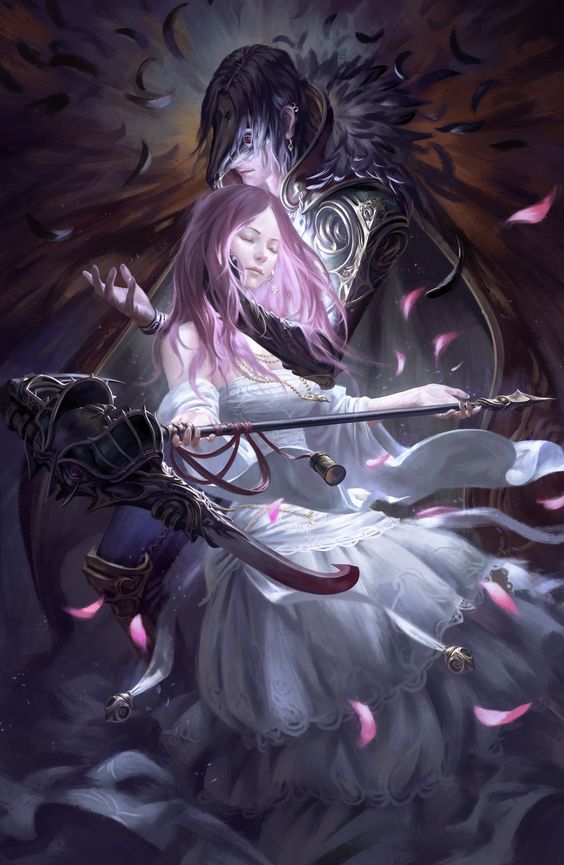

 By Autumn Rain