
Inspiration
An author's collection of thoughts and stories

I haven’t read more than a few pages of fiction novels published after 2010. That was the year the world became untenable for me, beginning with my inability to accept the popularity of skinny jeans and yoga pants. I cannot believe that anyone with functioning eyes can put on a pair of leggings, look in the mirror, and genuinely feel good about themselves. C’mon, you deserve better than that. You don’t have to treat yourself like crap just because everyone else is doing it.
As a Millennial, I keep my hopes up that one day we’ll explode on the scene and break all the molds. We’ll tell the publishing world in no uncertain terms that we demand better than 50 Shades of Grey, and crappy literature will vanish along with microwave dinners and Styrofoam cups. We can achieve so much more out of life than what the previous generations handed down to us.
I know what Millennials are capable of. I’ve seen plenty of brilliant short stories and creative ideas posted around the internet, but I have yet to find the officially published full length novels that are of the same quality. Maybe my peers have yet to realize the value of what they have to offer, and never work up the nerve to really throw it out there.
I know I’m not alone. I know you’re there.
Write with unhindered creativity, pour your love of English into every sentence, and do your best to hone your talent. Be artistic. Be real. Be different. Be you. Don’t rewrite Harry Potter and Twilight because they were popular, write the weird and quirky stories that you secretly post on Reddit. Just make them longer. A lot longer.
Self-publishing has become readily accessible to everyone, so you don’t have to follow the old channels of appeasement and rejection anymore — you can reach your readers directly. Don’t be afraid.
Join me, and we can change the literary world.

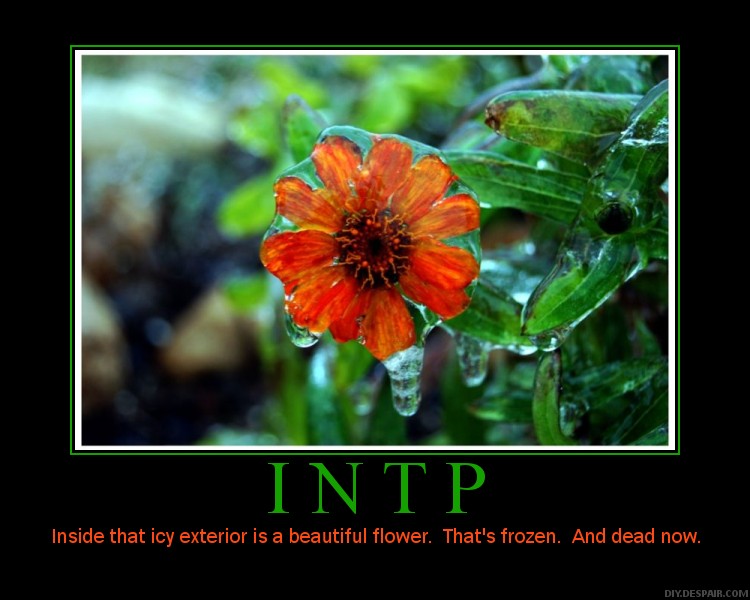
My personality type is INTP, which accounts for less than 6% of the female population. So when I say that I’m not a typical woman, I mean it; I’m not just trying to seem more interesting. Most women are ESFJ’s, making me the exact opposite of what everyone expects.
It’s the NT part that really makes me weird; intuitive yet detached. I firmly believe that there are at least three solutions to every problem, and if you can’t find the third one then you aren’t even trying. Self-sacrifice? Ha! I can find a way that will make everyone happy without any martyrs. Just watch me. Phishing for compassion is a waste of time, and I don’t care if you feel bad for me.
It freaks people out, because most of them have never met a woman like me. They want to stereotype and pigeonhole me, yet I never respond the way they expect me to. I am unpredictable and terrifying.
My personality type has frequently made me the target of bullying, and the general feeling of “I don’t belong with anyone, anywhere”, but despite that I’m enormously fond of it. I get a kick out of INTP memes, and I openly joke about my own “cold-hearted” nature. I have always prioritized being the sort of person *I* admire over pleasing anyone else, so at the end of the day I am satisfied with who I am without external approval. That’s what happens when you combine introverted with intuitive, thinking, and perceiving.
It is the reason why I write. I enjoy observation and introspection, and I see the philosophical value in every day life. I love the depth and complexity of human emotion, but I often approach it as something to be analyzed rather than swept away by. I am, in many ways, a narrator rather than a character.
Who can tell a story better than a narrator?

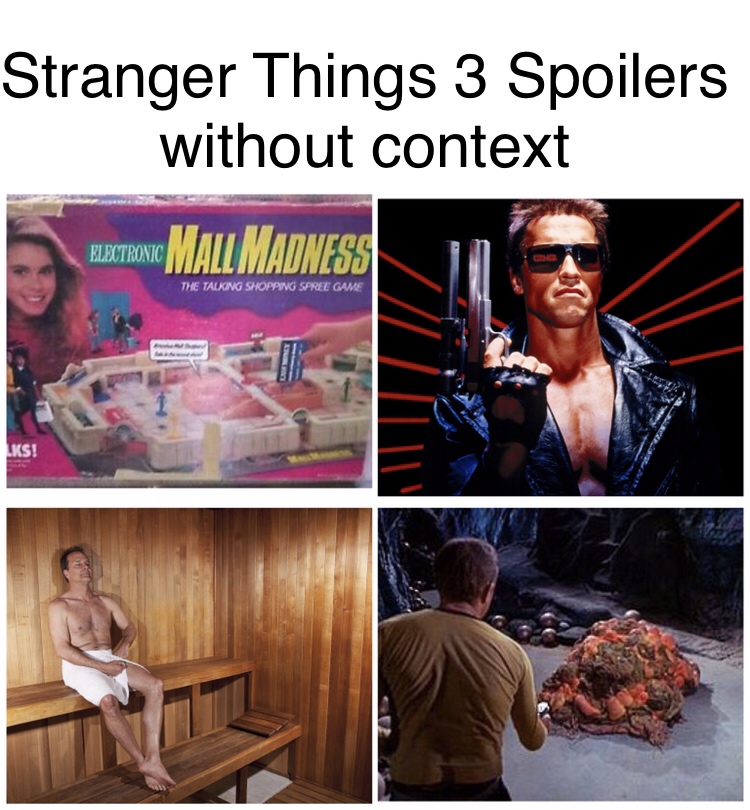
I adore the first season of Stranger Things.
I wasn’t looking forward to season 3. WAY too much time had passed since season 2, and I had stopped watching Netflix entirely ever since they killed member reviews (I like to have an idea of what I’m getting myself into, especially when the kids are around (which is almost always)). But, as my husband and I were browsing through the new releases on our Nintendo Switch, we saw that a game had been based on season 3, and we asked ourselves, ‘When was that supposed to come out anyway?’
Apparently, July 4th, so we slogged our way through it. ‘Slogged’ is really the best word, since season 3 was terrible.
The general overview is that the characters were turned into bland props, all of the quirky nerdiness that made the show so appealing in the first season was gone entirely, and there was a heck of a lot more cussing all around in lieu of intelligent dialogue. Instead of existential Lovecraftian horror, the main focus was on everyone breaking up with each other for the sake of relationship drama. Gag me.
Continue reading “Stranger Things 3”

As much fun as it is to blog every single day, I’ve been finding myself with considerably less mental energy for my other hobbies, and they have tapered off until they became no more. The cumulative effect is that I’ve been feeling more unbalanced and less grounded, since I utilize those fiddly hand motions with sewing or crochet to focus my mind and clear my thoughts. It’s meditative, and I need it.
That, in addition with all the summertime activities that I want to indulge in (we need to go to the pool often enough to justify the price of the membership), has led me to decide that I will update on Tuesdays and Thursdays, and continue with my weekend Inspiration posts as already established. While you probably assumed that the Inspiration posts were just filler (ha!), my hope is that they will help with ‘like meeting like’ in a way that blogging itself can’t accomplish — my main goal is to find others who are like me.
Since I’m going to be updating significantly less, I will make more of an effort to write longer posts with plenty of rambling about nothing in particular, to help you feel like I’m not jipping you out of my wonderful presence. I am reminded of that one time, when the weather was noteworthy is some mundane sort of way that I’m truthfully just flat-out making up because heck if I can actually recollect, when I did something that’s vaguely relevant but also mostly made up, to make you think that I live an interesting yet peaceful sort of life full of adventure and zen, magically balanced in a way that no real person could ever manage to pull off. Ah yes, those were the days. Don’t you just love anecdotes?
Okay, okay, reality is that the CRAZY is always thrashing at the bars of its carefully guarded cage, snapping at any fingers that venture too close, and waiting for the chance to escape. Sometimes it’s fun to let the CRAZY loose and run around screaming, but othertimes I need to put away the clean laundry before the cats rub their fur all over it. That’s the real balancing act.
Remember: Tuesdays and Thursdays. I’m off to the pool.

Whenever I take a gander at the hottest new releases on Amazon, I can’t help but feel like there really isn’t a place for me in the literary world. It’s not that I don’t believe that I have the skill to write, but rather, I think that society’s tastes have drifted too far for my novels to have much appeal.
I’m old fashioned, and I like sentences that flow well together as an easy thought, that can be read out loud to others. I like to focus more on straightforward storytelling, and I don’t particularly care about impressing anyone with my command of purple prose. I’m nothing like Game of Thrones, and I don’t feel any desire to erase my own voice in order to imitate the bestsellers. I don’t have any points to prove; I’m just make-believing because I like to, and savoring the process of filling up page after page.
I really couldn’t care less about what celebrities or the New York Times say about anything. Their opinions are more of a disincentive, to be truthful, and I will feel like an epic failure as an individualist if I gained their approval.
Sometimes I think that the real world is all about hyper-conformity, and trying as hard as possible to be “3 edgy 5 you” to prove how thoroughly you belong in the 21st century. Me? I’m enamored with the basics of True Love and Motherhood, and it doesn’t bother me that I don’t particularly belong to any century.
Ultimately, it doesn’t much matter. I’ve never been one for approval seeking, and in many ways I’ve lived my life to the opposite. As long as I’m happy and fulfilled, nothing else really matters.
I just kind of wish that I wasn’t so gosh darn weird compared to everyone else. Why can’t there be more weirdos in the world?

About ten years ago, I purchased a book that described demonic possessions in the summary on the back cover, and the first chapter was about the main character performing an exorcism. Seemed legit, and I had yet to learn to be jaded, so I went ahead and paid my scant pennies for the thing. However, after about a hundred pages in, the book was spending far more time and attention on gay BDSM than demons, and by the end it had never turned around. It turned out that the exorcism in the first chapter was the only exorcism in the entire book.
I had really wanted the demons.
Around the same time, I had purchased my field guide to demons (on clearance at Barnes and Noble, lol) and was ravenously studying everything I could find on demonology, so I thought it would be fun to throw in some brain candy on the same topic. When I had purchased the book that I had described above, I had been looking for a very specific sort of story, but what I got was completely different genre. The description never mentioned anything about BDSM or homosexuality, and I had been too naive and earnest to risk spoiling the plot by turning to page 150 to figure out what I was actually getting myself into.
It was such a huge disappointment, that it was the last newly released fiction novel I ever purchased. The best way I can describe it is that the author didn’t actually know what to do with her initial idea, so defaulted to the adage “sex sells” with the hope that no one would notice. As the reader, I felt like I had been sold fetish erotica in disguise, and I hate it when the product doesn’t match the labeling on the box.
So where on Earth is the literature for a girl obsessed with spiritual themes?
I still haven’t found it.

In the past, I used to try to socialize more. My oldest is very outgoing, and when she was 4-years-old, I felt guilty about being such a retiring introvert. Unfortunately, at that age, her social circle was my social circle, so I decided to put myself out there and see about those mom groups. The neighbor who was heavily involved in them seemed to be an okay person (I found out later that she was duplicitous AF), so I thought it would be a safe bet with at least one other “friend” already there.
At 22, I had danced naked in a forest during a thunderstorm (there was no chance of anyone else being around to see me), and I had felt magnificently connected to all of the elements of the Earth. I can still vividly remember the dark clouds overhead, the pink flash of lightning, the prickle of goosebumps in the cold rain, and the elation of nature and magic. I felt that I could never be struck down.
At 28, I was shrinking into myself, feeling hopelessly like an outsider around my peers, small and insignificant in their eyes. In turn, I found them to be boring, controlling, and generally unpleasant, and I was miserable around them. I hated being there. Hated being the only mom who carried my baby in my arms instead of hauling around a car seat, and the defensive reactions I got when I simply commented that it was because I thought car seats were cumbersome. Seemingly, everything about me was not only wrong, but actively offensive.
As much as I admire the stereotype of the self-sacrificing mother, there’s a huge difference between sharing my last bite of brownie and selling my soul to fit in. I have my limits.
Shortly after I quit, it filtered back to me that they had all been calling me a “doormat” behind my back. Um, what? I’m supposed to prove that I’m not a doormat by . . . abandoning my natural personality to become what someone else thinks I should be instead? No thank you, I’d much rather be a doormat; there’s more dignity in it.
No matter how others try to cajole or criticize me, I stubbornly stick to what I am. Why? Because I remember how it felt to dance with the wind and rain as the thunder kept the beat. Because I actually look at my peers, dressed in unflattering leggings with their hair tied on the very top of their heads like Teletubbies, and I know that I could never in a million years take myself seriously if I looked like that. Because my Jupiter is in Aries, so I need to be an uncompromising individualist in everything I do. Because I know what makes me happy, and what doesn’t.
As for my oldest, I adore the way she naturally is, and I don’t want her to learn to sacrifice her personality to have fake friends. It would break my heart if I lost her like that.
As a writer, experiences like that always get filed away in the back of my mind, along with all of the emotion and aftermath, to reappear as overarching themes in my stories.

My cellphone bit the dust.
I don’t consider myself to be a phone person. More than once, I’ve been the only mom working on crochet while waiting for the kids, while everyone else played on their phones. Mine lived and died in my purse, so if I was ever in the yard, or in my sewing room, I was unreachable — the old fashioned “do not disturb.” I like it that way.
But when the darn thing wouldn’t turn on, my first reaction was anxiety. How am I supposed to know when my appointments are? NOOOO!!
And I kind of hated that I was dependent on my phone.
I don’t think that technology is evil, or anything like that. It’s convenient to enter everything into my phone at the same time I make the appointments, to always have my grocery list handy for impromptu visits to the store, and to text random things to my husband all day long for the reassurance that he didn’t die in an accident while we were apart. I just also believe that I should be functional and not have a meltdown without all of that.
I decided to buy something newer, for the “pedometer” feature that my old phone didn’t have (I’ve had to think a lot more about fitness since baby #4), and ordered something from Ebay. While I wait for it to arrive, I will be 100% unplugged.
I’ve spent most of my life this way, yet now the prospect seems strange and a little unnerving.
More focus for writing, I suppose.

I’ve been working on the rough draft of my WIP for about ten months now. I started it when my youngest was still a newborn, so progress was very slow in the beginning. I even lamented that my main characters had been on their first date for weeks, and I was ready for it to hurry up and be over with.
For the past three months, I’ve been working on it every day. My realistic goal is a mere 400 words, though occasionally everything works out nicely and I get down about 1000. Progress is progress.
This is also the longest I’ve ever spent on a rough draft.
I’ve been enjoying it quite a bit. I like the extra time I’ve spent conversing with my characters, and the months spent day dreaming about their lives while washing dishes or folding laundry. I’ve grown very fond of these characters, and I haven’t become the slightest bit bored with the story yet. That’s a good sign.
I’m confident that the rewrite will go smoothly. Whenever I get to it. Ha ha.


