Alice and the Warden

Alice and the Warden – 2

Doctor Westley tended to the women of the prison with a small rotation of nurses, and while Alice knew full well that she wasn’t the only pregnant inmate, she was the only one who was personally accompanied to each appointment by the warden – and that made her stand out. He was amiable towards her, in that stiff sort of way that hinted at being unfamiliar with friendliness on the job. The only exposure Alice had to the female population of the prison was a long and miserable walk down the corridor of cells as Hackett escorted her from his office to the infirmary, for a physical examination to confirm the pregnancy that she had claimed on her admissions paperwork. By the time she had reached the end of the corridor, she was terrified at what she had gotten herself into. A few minutes later when Westley pricked her vein to collect blood, the sight of it squirting into a tube had sent her into a dead faint.

Alice had come to with Hackett holding an oxygen mask over her face, and a nurse placing pillows under her feet. That night, Hackett took her up to her room in the tower, apologized for the dust but assured her that the sheets were clean, then locked her inside. She never saw the other inmates or the prison cells again, for which she was grateful.

When she entered the infirmary for her appointment, Dr. Westley smiled at her. “Would you like to find out the baby’s sex today?” he asked.

Alice’s heart thumped. “Yes,” she answered quickly, her hands moving to cradle her stomach. “I want to know right away.”

“Go on with the nurse – you know the routine – then we’ll get set up to find out.” He patted her shoulder. “Don’t be nervous.”

Alice nodded then followed the nurse towards the bathroom. After they finished up with the routine prenatal tests, she returned to the main examination room to find Hackett and Dr. Westley laughing together, though her presence meant their conversation was over. She had seen enough to know that they were good friends behind the scenes, but around her they always maintained the professional distance of coworkers. In a strange way it made her feel left out, even though she had no business trying to be chummy with either of them.

“All right, lets get started, shall we?” Dr. Westley motioned for her to sit in the exam chair. “Don’t be so nervous; ultrasounds don’t hurt at all. We’re just going to take a quick peak inside to see how the baby is doing.”

And find out the gender,” Alice said, forcing a smile. She didn’t know why her heart was pounding so hard, and she silently reminded herself that practically every pregnant woman found out beforehand, now that the technology existed. But she was scared that she would be disappointed with the revelation, and only have herself for consolation once she was locked in her room once again. Despite the trappings of comfort, she was still a prisoner who had confessed to murder.

Hackett came to stand beside her, and brushed her hand with his fingers. He was watching Dr. Westley, so Alice wondered if the touch had been accidental. She shifted away, but his fingers gently touched her again, and she realized that he was trying to reassure her while maintaining subtlety.

I wish that he was the real father, she thought, then felt her cheeks grow hot with the realization of what had crossed her mind. No, she corrected herself, she wished that the baby’s real father was there, instead of the warden.

Dr. Westley had dimmed the lights, so no one saw her blush. She winced when the doctor squirted cold jelly onto her stomach, then placed the wand against her skin. The screen came alive with movement and strange shapes, and it wasn’t until Dr. Westley stopped the picture that Alice realized she was looking at a leg and a foot.

“Oh my god,” she blurted. “Is that my baby?”

“Sure is,” Dr. Westley murmured in reply, staring at the screen as he began to shift the wand around again. “Looks good. Looks good,” he mused quietly to himself, then finally turned Alice and smiled. “The baby is developing normally, so let’s get to the important part.” He shifted the wand around to the top of Alice’s stomach, and she held her breath as she stared at the screen, knowing that she wouldn’t be able to interpret the image herself but still searching for any tell-tale signs. Her fingers weakly grabbed onto Hackett’s as Dr. Westley said, Let’s see … the baby is a … girl.”

A girl …” Alice repeated quietly. “I’m going to have a girl.” Then she broke into a grin as she looked up at Hackett and joked, “Hopefully she won’t turn out like me, huh?”

He moved away, pulling his hand out of hers. “You’re still turning out,” he answered, but Alice didn’t understand what he meant by it.

After she was cleaned up, she said goodbye to Westley and the nurse, then followed Hackett through the winding path back to her room. She knew that he was deliberately leading her through the hidden passages that had been utilized during the prison’s former days as a castle, and it amazed her that he never got lost. If she ever tried to escape, she wouldn’t make it out of that maze.

“Hey,” she said slowly after a minute. “If people really can climb the trees and peek in at me, I’d like to put up some curtains.”

What color?” he asked.

“Pink, for my baby.” She smiled as she cradled her stomach in her arms. “You’ll fight for me, won’t you? My baby is all I have to live for, and I’ll do everything I can to be a good mother for her. I’ll get an honest job, and I won’t ever have sex again, I swear.”

Hackett laughed. “I’ll do what I can, but ultimately it will be up to you on whether or not you keep her. I can get you enrolled in the education program in the meantime, since that will certainly help you find your feet. You can’t stay here forever, you know, especially with a baby.”

“I know.” Alice couldn’t help but sigh. “I kind of wish I could though. You’re my only company, but I don’t feel as lonely as I used to. I used to always feel like I was … pretending.”

They were quiet for a time, as Alice tried to understand what was going through her heart. Thinking about Damon, and the life that she had shared with him, hurt her in a way that she hadn’t expected. She regretted it, and wished that she could undo every part of it.

“I read a new book,” Hackett said. “I thought that you would enjoy it too.”

“Oh!” Alice exclaimed, surprised by the break in silence. “Good! It’s been a week since the last one, and I missed talking about books with you.”

Hackett patted her shoulder as he smiled. “You have more free time than I do. You should be recommending new books to me.”

“I can’t leave my room to find them.” Alice grinned back at him. “Go ahead and do that education thingy too. It’s not too late for me to get a GED, right? It might help me stop being so stupid.”

“You aren’t stupid.”

“Sure I am.” Alice looked down at the floor. “You don’t know what I was like before I came here.”

“I know that you have good taste in literature,” Hackett replied. He stopped and turned to face her, putting his hand under her chin to look her in the eyes. “I know that underneath everything, you have a good heart.”

He kept walking then, stopping a few feet away to motion for Alice to hurry up and follow.

NEXT

The Black Magus

Real Love

I’m a hopeless romantic, through and through.

This was perhaps a bit silly of me, but after “The Scion Suit” gained a smidgen of attention on Reddit, I wondered if I should downplay the romance aspect of The Black Magus to make it sound more appealing to the sort of people who would actually read it — after all, I don’t think that I’d gain much traction with Twilight fans. But, I decided that would be rather disingenuous, considering that it’s right there in the very first chapter.

So there you have it: The Black Magus is the ultimate Mary-Sue fanfic, where the main character is a shy nobody who through sheer coincidence gains the attention of the most powerful magus on the planet. He competes against another magus to win her affection in a saucy love triangle, and ultimately pulls ahead by gifting her the most expensive car ever built. The girl, on the other hand, maintains an emotional affair with the other guy, just to prove how strong and independent she is after she’s married …

LOL JK

I’m totally not awesome enough to write that.

It’s not the sort of crap that’s always portrayed in popular romance novels. It’s also not the sort of “singles together” crap that we’re told to settle for because “romance doesn’t exist”. You won’t find any Taylor Swift songs that fit it.

It’s about devotion and compassion. It’s about two people joining together to become a family, and learning how to be there for each other. It’s about real love.

There’s also some stuff about magic and the world they live in, and a few other characters who have some dialogue and whatnot. You know, that necessary story-type stuff, to flesh it out into an actual novel and set up the sequel.

So, I have decided against downplaying the romance aspect of The Black Magus, because it is the entire foundation and structure of the novel. Please, don’t dismiss it because of a few bad stereotypes — I assure you that this story is different.

The Black Magus

The Black Magus characters


I know.

I spent over a year working on the first draft for this novel, and these are the only notes I made on the two main characters.

Lawl.

I confess, I’m terrible with notes, so I often find it easier and more organized to keep all of the information in my head. I don’t create character charts, or worksheets, or blah blah blah, because I make a point of locking everything in my mind.

Which is probably one of the reasons why I don’t fit in with writing communities.

Besides. Most of the time, I just listen to what they have to say anyway.

So, here we are: introducing the two main characters from The Black Magus, my upcoming fantasy romance novel.

Are you as excited as I am?

About Writing, The Black Magus

Title Reveal for the latest novel from Autumn Rain (OMG!!!)

d4c4f658-431b-4209-a0a8-d65a4de22de5

About Writing

Pet Peeve

A couple years ago I read Petals on the Wind by V. C. Andrews. I confess that her first book, Flowers in the Attic, is something of a morbid fascination for me, but the sequel was … excessive.

SPOILER: Every man the main character sleeps with conveniently dies at the perfect moment.

I suppose that there was something of a generation gap going on as well, because the incest didn’t bother me at all (it was the only relationship that was actually built on genuine emotional connection), but the pedophilia was extremely disturbing — especially because it was a contributing factor to one of the characters committing suicide — yet all the other characters were like, “Lol, whatev’s.”

ANYway, part of the way through the book the main character has a baby and is left as a single mother, because, you know, every man she sleeps with dies. In her determination to prove her independence, she gets a job and has her younger sister move in with her for daily babysitting.

Then her sister commits suicide and she finds another man to sleep with. All of those normally time consuming things like toddlers and work fade into the background so she can go catting around instead. Childcare and paying the bills? Pshaw! No where near as important as those sex scenes.

This is one of my biggest pet peeves in fiction: when activities that normally require massive amounts of time in the real world are completely ignored with no explanations.

Children in particular are often used as handy little props that disappear when they aren’t required, and as a mom, I find this irksome. In the real world, they are always there, calling for you, following you everywhere you go, watching you poop. Whenever you realize the room is unnaturally quiet, you panic and start yelling for them. THAT is the true nature of children.

As for jobs … it sure would be a fantasy if my husband could take time off whenever the whim struck him, but that would probably get him fired fairly quick. Work takes up enormous amounts of time and energy, and it’s necessary for things like food and shelter. You can’t just decide that you’re bored of it and not suffer any consequences.

Which is why it annoys me so much when fictional characters have it unrealistically easy for no reason — other than those juicy sex scenes I guess.

About Writing

Terrible Reader

I confess that I’m a terrible reader. Every time I pick up a book, I think, “This time I’ll read every word,” then sooner or later, I get bored and start skipping through.

“Why is the author taking so long to call the wagon green?”

“Meh, sex.”

“Okay, this character is stupid.”

“We get it already, they had a good time at the picnic.”

When I read out loud to the children, I adopt that bored, “Let’s get through this massive paragraph as quick as possible” monotone voice, and I’m afraid it’s pretty obvious that I don’t enjoy it.

It always feels like there’s a huge number of words getting in the way of the story, and I can’t remember the last time I found a book engrossing. Sometimes I could swear that authors actually want readers to skim over half of the novel, and throw in lots of filler just to look more impressive at first glance.

“In my book, it takes 800 pages for fifteen characters to make a single grilled cheese sandwich. It’s rich with subplots about running out of bread, taking bathroom breaks, and even falling in love. I also included numerous philosophical discussions about the merits of cheddar versus colby jack, and the different methods of toasting the bread. I included lots of poetry. There’s even a surprise plot twist where it turns out that half the characters are actually grilled cheese sandwiches themselves! The novel ends after the characters burn down the house and die because they tried to make it in the toaster.”

Oh wow!

No way!

The funny thing is, when I read my own stories with the same method I use to read other novels, I do get the whole, “WOAH this story is progressing crazy fast!” feeling. My style really isn’t best experienced by charging through. I do always “test read” my stuff before putting it out there, and following the natural flow of my mind without trying to speed up or edit anything feels good to me, so that’s how I keep it.

I skip writing the stuff that I skip reading. Which is a lot. But hey, that also means that there isn’t anything for you to skip over either, because I’m probably WAY worse than you about that.

Lol.

About Writing

Writing Lessons from Bob Ross: Embrace the Process

Sometimes I like to turn on Bob Ross to absorb how calm and mellow he is, and I find it relaxing to sit and watch him paint for a bit. Children are highly chaotic entities, so I know how to appreciate the change in pace that comes with everyone sitting together watching a show that we can all enjoy.

It occurred to me that one could also learn how to write from Bob Ross, as long as you think metaphorically.

He doesn’t simply slap down blobs of color and call it done. He blends the paint, adds shadows and highlights, and is mindful of the details. He also doesn’t overwork the paint or try to control every single aspect of the picture, instead working with the textures of the brush strokes and allowing elements to evolve naturally.

And, as everyone knows, “There are no mistakes, only happy accidents.”

A lot of writers stop at the blobs of color phase. They’ll free write whatever passes through their minds then hit ‘publish’ without any more thought about the story. These sorts of writers can produce a lot of content in a short amount of time, but it will all feel unpolished and unsatisfying. Often, when I have tried to explain how these writers have good potential but they need to dedicate more attention to reworking their story, they get upset rather than accepting the advice (even when I’m responding to their request for criticism). So, remember, blobs of color are your foundation, but they are not your finished story. The first draft should not be your last. And no, your blobs of color are not more genius than anyone else’s. They all pretty much look the same.

Others will overwork the story to death. They’ll edit out the spontaneity of adventure, and reduce their characters to props who serve rigid roles, instead of letting them shine as quirky individuals. These writers don’t let the overall picture evolve naturally, and their stories feel formulaic. While they are often well intentioned, they don’t know how to let the story flow on its own.

There are also writers who put in too much detail, and create overly-busy stories with no clear focus. They forget to leave the background in the background. They throw too much information at the reader all at one, or create more characters than there’s room for. They describe the condiments instead of the picnic.

When you are in the process of editing, take a step back and try to visualize the story as a painting. Is there enough detail without being overdone? Did you let elements evolve naturally and follow the flow? Did you flesh out the foreground and leave the background appropriately hazy? Is it something that you would hang on *your* wall? Remember, you can always fix it.

And the next time you watch Bob Ross, just imagine that he’s speaking in metaphor and soak in all of his encouragement.

Books

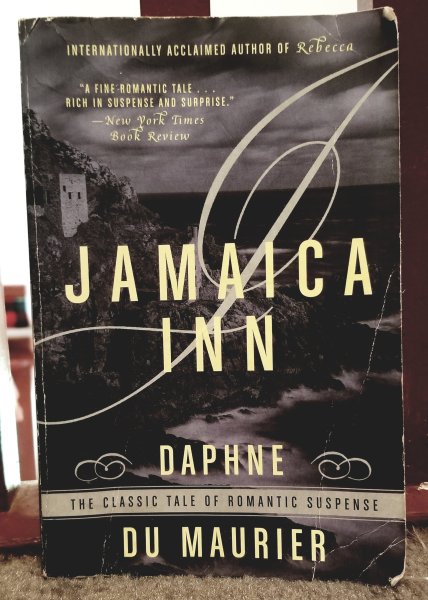
Jamaica Inn by Daphne du Maurier

20190815_1220556284435544686515813.jpg

When I was in middle school, a friend excitedly told me about a book titled Rebecca, and recommended that I read it because the main character was a lot like me. I’m still not convinced of the similarity between me and the main character, but I definitely liked how dark and gothic the story was. Rebecca became one of my favorites.

A few years ago, my copy was stolen out of our car by a pot-head, who probably thought that the red satin cover meant it was a trashy sex book. Hopefully, she enjoyed it anyway.

I decided that it was time to get around to replacing my copy, and picked up something else by Daphne du Maurier in the process. Despite how much I liked Rebecca, I had never felt any interest in reading any of her other books before now.

I settled on Jamaica Inn.

The horror and suspense are very well written; subtle and unrushed, which gives the reader time to properly appreciate the dark situation the main character finds herself in. I think that the impact of the BIG REVELATION was a bit lost on my modern Millennial mind, given that we currently live with mass murder being a depressingly common thing and all, but it wasn’t hard to appreciate it in the context of the book.

However, the romance was the weakest point, and the overall story would have been improved if it had been left out all together. It came across as a strange mixture of Mary-Sue fantasizing and self-loathing, and didn’t feel natural in the slightest. Every mention of love could have been blacked out and the plot would have remained entirely unchanged.

There was a very bad attempt to hand wave away a glaring plot hole two-thirds of the way in, and the story never quite recovered afterward.

My favorite character was the vicar, and I wish that he had more “screen time” so to speak. This probably attests to how weird of a person I am, but his lines were the ones that made my heart quicken with excitement, and I would ravenously devour any book that was written all about him. Unfortunately, he only appears a few times, and serves as a handy prop to make the ending more DRAMATIC. Still, I liked him.

The ending was not what I would have written, and I personally found it unsatisfying. While I am mindful of the fact that this book was published in the 1930’s and society was different back then, I still think that the choices the author made were lackluster and cowardly. Why does fiction have to be so black and white all the time? Real life sure as heck isn’t.

Finishing the book left me feeling disappointed and morose.

My rating: 4/5

About Writing

Book Covers

2523067

My husband found The Regiment (published 1987) in a used bookstore back in 2010, and a few days later handed it over to me with the instruction that I *had* to read it. The Regiment is a scifi novel that is deeply philosophical, with a subtle element of spirituality woven in, and it influenced the way I think of every day life. It’s definitely one of my favorites.

It was never unpacked after our last move, and now currently resides in a box in the basement, so it’s been awhile since I’ve read it. One of these days I’ll get around to unpacking those boxes, but that day is not today.

The thing is, my husband and I got a very good laugh about the cover, and we still occasionally reference how bad it is. The picture is only vaguely related to the novel at best, and the tagline is so badly wrong that I suspect whoever wrote it hadn’t even read a summary. Excellent book, terrible cover.

51kXXut3NfL._SX330_BO1,204,203,200_

I purchased Wicked Lovely when it was a new release in 2008, back when I was young and trusting. I consider it to be a guilty pleasure, since while I adore the idea of faerie courts in the book, I think that it is put together in a way that is shallow and a touch crude.

Mind you, I’d still rate the book 3.5/5, and I even followed the author’s blog for awhile clear back then, so I mean it when I describe this as a guilty pleasure. I read the sequel, Ink Exchange, and every now and then ponder whether or not I should get more books by Melissa Marr, just to see how her writing has been coming along. Unfortunately, the premise of the novels never unfolded in a satisfying fashion, so I continue to hold back. There’s just too much of a modern twist in her writing.

Wanna guess why I bought this book back then?

The cover.

It was pretty.

The contents therein did not match expectations. If the cover had actually reflected the story, I wouldn’t have spent my hard-earned pennies on it, because I’m not a modern sort of person by any stretch of the imagination. Now that it’s 11 years later, I might cut the cover off, frame it, and hang it on the wall where I can look at it, but I’m not all that inclined toward reading the novel again. It’s probably a good thing that this book is also squirreled away in the basement.

I might, at some point in the future, write my own version of faerie courts to tell the story that I had wanted to read back then, though my cover won’t be anywhere near as pretty if I do. I’ll have to rely on the strength of words alone to generate appeal, and we all know how well that will work, le sigh.

At least I’ll have the satisfaction of a good story.

I don’t judge books by their covers anymore; beauty is only skin deep.


About Writing

Why I don’t read contemporary books

I’ve said repeatedly that I don’t read anything that was published this decade, because I’m a cranky bitch who hates everything about modern living … and all that. Hur hur.

I’m not doing this to be an irrational hater, but rather to analytically illustrate what I think is wrong with contemporary literature. At random, I have selected a paragraph out of a book titled, Meet Me at the Cupcake Cafe, because another blogger linked to it recently (hello!), and I think it serves as a good example of why I have dismissed this decade’s literature all together.

Disclaimer: I have not read this book, cannot review the quality of the story itself, and haven’t the slightest idea of what the writing is like outside of the preview available on Amazon. I have absolutely no opinion on the book itself; my complaint is with contemporary writing practices.

From the sample:

They both turned to look out of the window of the assisted living facility in north London. Issy had installed Joe there when it became clear he was getting too absentminded to live on his own. Issy had hated moving him down south after he’d spent his life in the north, but she needed him close to visit. Joe had grumbled of course but he was going to grumble anyway, moving out of his home to anywhere that wouldn’t let him rise at 5:00 a.m. and start pounding bread dough. So he might as well be grumpy close by, where she could keep an eye on him. After all, it wasn’t as if anyone else was around to do it. And the three bakeries, with their proud, shiny brass handles and old signs proclaiming them to be “electric bakers,” were gone now; fallen prey to the supermarkets and chains that favored cheap white pulp over handcrafted but slightly more expensive loaves.

First, for some unfathomable reason, authors have all decided that they have a raging allergy to commas. Maybe they think it’s more conversational, that commas are outdated and useless, or they simply never learned how to organize a sentence during their schooling; whatever the case, reading feels more like delving into an overgrown forest where one is expected to hack their way through alone. It also makes it significantly harder to read out loud, since being expected to run on and on without any pauses in one long unbroken sentence gives a monotone effect that can be really quite hypnotic … Woah, sorry, got sucked into the wrong dimension there for a moment.

The worst, in my opinion, is something that I think of as “THE TWITTER EFFECT.” You never, ever, not in a million years, see sentences longer than 280 characters (most will stay under 140, which was Twitter’s original cut off point), even in novels. Yes, I know that Moby-Dick was ridiculous for having sentences that spanned more than one page, but that doesn’t mean the answer is to only write short, choppy, status updates in lieu of actual paragraphs. I blame social media.

The longest sentence in the quoted paragraph is 258 characters, including the improperly used semicolon. Four of them are shorter than 100 characters, which accounts for more than half of the sentences in the paragraph.

So, let’s rewrite it. After all, if I’m going to claim that I can do better, I might as well back it up!

They both turned to look out of the window of the assisted living facility in north London, where Issy had installed her grampa Joe after it had become clear that he was getting too absentminded to live on his own. Issy had hated moving him so far from his home, but she had wanted him close by for her to visit, and they had no other family members who were willing to help take care of him. Joe had grumbled, of course, but he was sure to be grouchy anywhere that wouldn’t let him rise at 5:00 a.m. to start pounding dough, so he might as well be grouchy where she could keep an eye on him. The three bakeries of his past, with their proud, shiny, brass handles, and old signs proclaiming them to be “electric bakers”, were gone now, fallen prey to the supermarkets and chains that favored cheap, white pulp over handcrafted, yet slightly more expensive, loaves.

The length is the same, but I combined the seven sentences into four to decrease the choppy effect of countless periods, and enhance the overall flow of the story itself. I used a lot more commas for clear organization, and with any luck, you should be able to read that sucker out loud without stumbling. Give it a shot, and tell me if I’m wrong.

Thusly we have learned: Use commas and think longer thoughts, ’cause I ain’t got nothin’ to read.

I need a rest after writing this post. Whew.