About Me

Anonymity

I like anonymity.

At this point, I’ve received so many disparaging comments about wasting my life as a stay-at-home-mom, I don’t want people to think that there’s any hope for me.

As a woman, I don’t believe that I’m obligated to prove my value as a person through masculine evaluations of quantities and numbers. I am not defined by a paycheck. My worth is found in the joy and beauty I offer to the world, and that includes raising happy, well-adjusted children. God knows the world needs more happy, well-adjusted people in it.

So don’t chain me down with your money. *spits*

I get a perverse delight over how upset random strangers get when they learn that I don’t lift a finger to earn a dime. I love flaunting that I’m wasting my life and smratness right in their ugly little faces. Ooo! You can’t do a thing about it! Ha ha!

You’re all like, “What a second, don’t you self publish on Kindle?”

Yes, yes I do.

I’ve discovered that I struggle a huge amount with posting chapters weekly, even when the novel is completely finished and all I have to do is copy-n-paste. While I was contemplating what to do about this problem of mine, Kindle was the word that kept repeating over and over in my mind, so that was that.

ANYway, the problem is anonymity is that, while it protects me from people getting all pushy about monetizing and whatnot in real life, it also prevents me from doing other things. Like posting an author photo and utilizing YouTube.

I do want to find readers, and I like quirky methods.

I might shed the invisibility cloak soon. Tell my mom what I’m up to and all that.

But only because I love you and I want to find you. We’re kindred spirits, you and I.

About Me, About Writing

Finding Beauty in the Ordinary: A Writer’s Journey

I’ve always believed that a talented enough writer could turn the topic of drying paint into a fascinating read, but there’s something that I didn’t quite realize until my late 20s:

You have to be the sort of person that sees the beauty in drying paint in the first place.

This is on the “no duh” side of epiphanies, but frankly, it’s not how I was taught to live.

I was raised on the “go to college, get married, spend the rest of your life balancing work and family” formula. Occasionally someone would advise to stop and smell the roses, but you weren’t supposed to notice the veins of color in the petals, or compose metaphors to describe the scent. You definitely weren’t supposed to study the thorns in great detail either.

Did I lose you? Do you understand?

I rebelled when I was 20. I don’t mean that I went to wild parties or did anything stupid; I’ve always been far too introverted for rambunctious crowds, and too conscientious for short-sighted acts. I went to the park late at night to play on the swing set and feel the cool summer air play through my hair. I danced in rainstorms. I fell madly in love with the simple things, like listening to crickets or watching a candle flame dance. I engaged.

And no one understood. How could they? I was surrounded by people who spent their entire lives dissociated from their experiences, and they just didn’t know what to do with me. I was labeled ‘weird’ and left at that.

Being a talented writer isn’t just knowing the mechanical skills, it’s an entire way of living. It’s being unafraid to see the world like no one else does. It’s embracing both the pleasure and the pain. When you, as a person, live a life of passion, it will automatically permeate your writing.

That’s one of the reasons why I feel so driven to write: I want to share how I experience life in a way that others will understand. I want to offer more than what can be seen on the surface.

Metaphorically speaking, I want to express the beauty I see in drying paint.

About Writing

Writing for readers

At some point during the writing process, you have to start thinking about your readers.

I don’t mean you should sellout and introduce a teenage vampire who spends all day angsting about how much he hates himself, and all night getting spanked in the local underground BDSM scene, before being chosen to participate in a deadly game of wits and survival. Yuck. No.

When you chat with someone face-to-face, it’s considered polite to speak clearly and audibly, and to continually read the other person’s cues to make sure they aren’t growing bored by your rambling. When you’re done, you say goodbye instead of just walking away.

Writing should be approached with the same considerations. While it’s much harder to work without a present audience yawning and glancing at their cell phones, it’s good to empathize with imaginary readers and place yourself in their shoes, so to speak.

Continually ask yourself questions like:

“Is this sentence clear or do I need to reword it?”

“Is this part boring?”

“Are my transitions smooth or jarring?”

“Does this paragraph flow when I read it out loud, or is it choppy?”

“Is the end too abrupt?”

Etc, etc, etc.

Your readers are your best friends; they’re the ones who appreciate a part of you that even your parents don’t know about (at least for many of us writers, lol). Don’t take them for granted. Be a gracious host and make sure that they’re having a good time.

If you know someone you trust who fits your target audience, go ahead and use them as a beta reader. Watch them read. Pay attention to their facial expressions and body language. While they may say that something is good, a wrinkled brow and down turned mouth will tell you that there was something unsatisfying, but they might not be able to articulate it. Don’t take it personally, just think about how to make it better. I promise you that it’s a good feeling to come back with the improved version and watch someone gush over something they were previously “meh” about.

While it’s good practice to write the first draft for yourself, be in the habit of rewriting the last one for your readers. They have the power to set you down and dismiss you forever, so don’t lord your ego over them. Be nice and considerate, and show some appreciation.

About Writing

Complaining

Why do I complain so much about contemporary literature?

Personally, I’m not likely to run into any sort of shortage of used books to read — as anyone who has been in a thrift store can attest to — so the hottest new releases don’t have any affect on me no matter how badly they are written. If I were to speak truthfully from the coldest place in my heart, I think it would be a relief if publishing houses died wholesale. Good riddance.

Contemporary literature is all about making money. Idealistically, we want to believe that ‘high quality = more profit’, but the popularity of the YouTube channel ‘5 Minute Crafts’ is undeniable proof that sentiment just isn’t true. Profit comes from tickling algorithms coupled with click-bait, and corporations have turned it into a science.

The thing is, ‘5 Minute Crafts’ and its ilk aren’t harmlessly mediocre underneath all the hype. I’ve seen videos promoting burning your hair with a candle, soaking strawberries in bleach, and other such activities that have no business in a DIY context, and should never be tried at home. Seriously, burning your hair is not a fast way to get rid of split ends, it is a stinky way to get rid of your hair. People are prophesying that these channels will one day kill YouTube.

Let’s bring the topic back to books: publishing houses, and by extension writers, are excessively geared towards money. The algorithms utilize formulaic stories that just so happen to hit all the right trending key words, and the shiny covers function as the click bait. Whether or not the story is actually well written and engaging is never the question.

You see, it doesn’t matter how much teachers extol the virtues of reading, no one is going to bother if the experience is a tedious one. Every time I hear someone say that they hate reading, I sympathize with the statement, “Most books suck.”

I say that as a writer.

The last I heard, fiction sales have been steadily dropping for some time now, and I don’t believe that the popularity of video streaming or video games has anything to do with it — movies have existed for quite some time, and the adage has always been, “the book is better” up until now. I believe that fiction is dying because no one gives a shit if the reader has an enjoyable experience or not, so long as they can collect on the royalties.

Statistically I also contribute to “the death of the novel”, because I haven’t purchased anything new in the last ten years, even though I still read books. I’m not voracious by any stretch of the imagination, but I’m usually working my way through something. I’m sure there are others who read plenty of fiction, but who also prefer used books, or websites that provide content for free. Humans have loved storytelling since the dawn of time, and that isn’t going to change.

I complain about contemporary literature because, as a writer, I often feel like I’ve dedicated my life to a field that is gaining an increasingly bad rap through blatant mismanagement. It doesn’t matter how much love and attention I put into producing quality works if people have been taught through experience to hate reading in the first place.

Since I’m not delusional enough to believe that my solitary rumblings are going to have any sort of effect on the world, I often wonder what other sort of venues are there for connecting with readers. How can I publish novels without resorting to books? How can I stand apart from contemporary literature?

Muse

Inspiration

tumblr_ofctzh6NAp1qk1m72o1_1280

Source


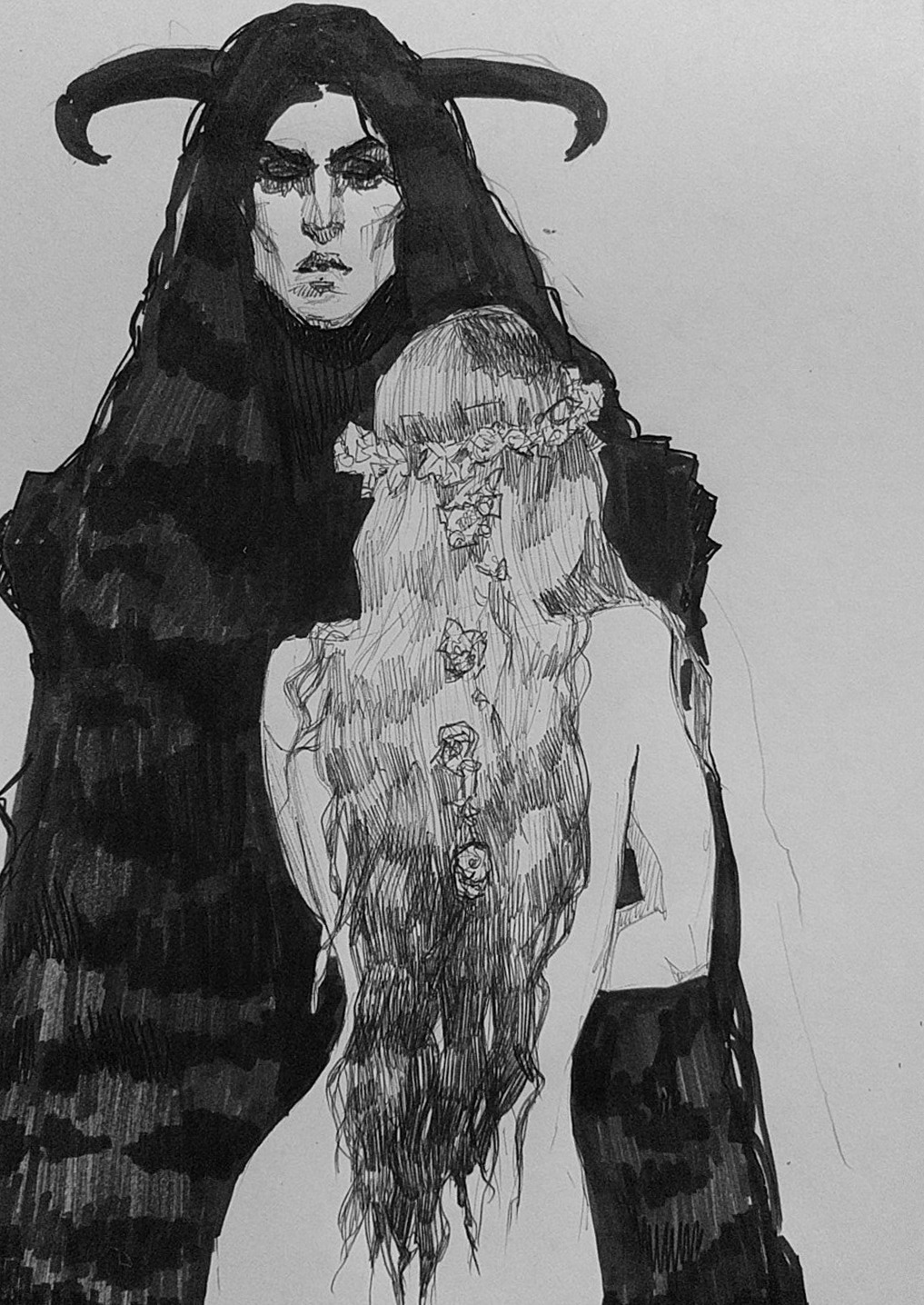
This picture reminds me of the main characters from my current WIP, metaphorically.

About Writing

Why I don’t read contemporary books

I’ve said repeatedly that I don’t read anything that was published this decade, because I’m a cranky bitch who hates everything about modern living … and all that. Hur hur.

I’m not doing this to be an irrational hater, but rather to analytically illustrate what I think is wrong with contemporary literature. At random, I have selected a paragraph out of a book titled, Meet Me at the Cupcake Cafe, because another blogger linked to it recently (hello!), and I think it serves as a good example of why I have dismissed this decade’s literature all together.

Disclaimer: I have not read this book, cannot review the quality of the story itself, and haven’t the slightest idea of what the writing is like outside of the preview available on Amazon. I have absolutely no opinion on the book itself; my complaint is with contemporary writing practices.

From the sample:

They both turned to look out of the window of the assisted living facility in north London. Issy had installed Joe there when it became clear he was getting too absentminded to live on his own. Issy had hated moving him down south after he’d spent his life in the north, but she needed him close to visit. Joe had grumbled of course but he was going to grumble anyway, moving out of his home to anywhere that wouldn’t let him rise at 5:00 a.m. and start pounding bread dough. So he might as well be grumpy close by, where she could keep an eye on him. After all, it wasn’t as if anyone else was around to do it. And the three bakeries, with their proud, shiny brass handles and old signs proclaiming them to be “electric bakers,” were gone now; fallen prey to the supermarkets and chains that favored cheap white pulp over handcrafted but slightly more expensive loaves.

First, for some unfathomable reason, authors have all decided that they have a raging allergy to commas. Maybe they think it’s more conversational, that commas are outdated and useless, or they simply never learned how to organize a sentence during their schooling; whatever the case, reading feels more like delving into an overgrown forest where one is expected to hack their way through alone. It also makes it significantly harder to read out loud, since being expected to run on and on without any pauses in one long unbroken sentence gives a monotone effect that can be really quite hypnotic … Woah, sorry, got sucked into the wrong dimension there for a moment.

The worst, in my opinion, is something that I think of as “THE TWITTER EFFECT.” You never, ever, not in a million years, see sentences longer than 280 characters (most will stay under 140, which was Twitter’s original cut off point), even in novels. Yes, I know that Moby-Dick was ridiculous for having sentences that spanned more than one page, but that doesn’t mean the answer is to only write short, choppy, status updates in lieu of actual paragraphs. I blame social media.

The longest sentence in the quoted paragraph is 258 characters, including the improperly used semicolon. Four of them are shorter than 100 characters, which accounts for more than half of the sentences in the paragraph.

So, let’s rewrite it. After all, if I’m going to claim that I can do better, I might as well back it up!

They both turned to look out of the window of the assisted living facility in north London, where Issy had installed her grampa Joe after it had become clear that he was getting too absentminded to live on his own. Issy had hated moving him so far from his home, but she had wanted him close by for her to visit, and they had no other family members who were willing to help take care of him. Joe had grumbled, of course, but he was sure to be grouchy anywhere that wouldn’t let him rise at 5:00 a.m. to start pounding dough, so he might as well be grouchy where she could keep an eye on him. The three bakeries of his past, with their proud, shiny, brass handles, and old signs proclaiming them to be “electric bakers”, were gone now, fallen prey to the supermarkets and chains that favored cheap, white pulp over handcrafted, yet slightly more expensive, loaves.

The length is the same, but I combined the seven sentences into four to decrease the choppy effect of countless periods, and enhance the overall flow of the story itself. I used a lot more commas for clear organization, and with any luck, you should be able to read that sucker out loud without stumbling. Give it a shot, and tell me if I’m wrong.

Thusly we have learned: Use commas and think longer thoughts, ’cause I ain’t got nothin’ to read.

I need a rest after writing this post. Whew.

About Writing

My hope

I haven’t read more than a few pages of fiction novels published after 2010. That was the year the world became untenable for me, beginning with my inability to accept the popularity of skinny jeans and yoga pants. I cannot believe that anyone with functioning eyes can put on a pair of leggings, look in the mirror, and genuinely feel good about themselves. C’mon, you deserve better than that. You don’t have to treat yourself like crap just because everyone else is doing it.

As a Millennial, I keep my hopes up that one day we’ll explode on the scene and break all the molds. We’ll tell the publishing world in no uncertain terms that we demand better than 50 Shades of Grey, and crappy literature will vanish along with microwave dinners and Styrofoam cups. We can achieve so much more out of life than what the previous generations handed down to us.

I know what Millennials are capable of. I’ve seen plenty of brilliant short stories and creative ideas posted around the internet, but I have yet to find the officially published full length novels that are of the same quality. Maybe my peers have yet to realize the value of what they have to offer, and never work up the nerve to really throw it out there.

I know I’m not alone. I know you’re there.

Write with unhindered creativity, pour your love of English into every sentence, and do your best to hone your talent. Be artistic. Be real. Be different. Be you. Don’t rewrite Harry Potter and Twilight because they were popular, write the weird and quirky stories that you secretly post on Reddit. Just make them longer. A lot longer.

Self-publishing has become readily accessible to everyone, so you don’t have to follow the old channels of appeasement and rejection anymore — you can reach your readers directly. Don’t be afraid.

Join me, and we can change the literary world.

About Me

INTP

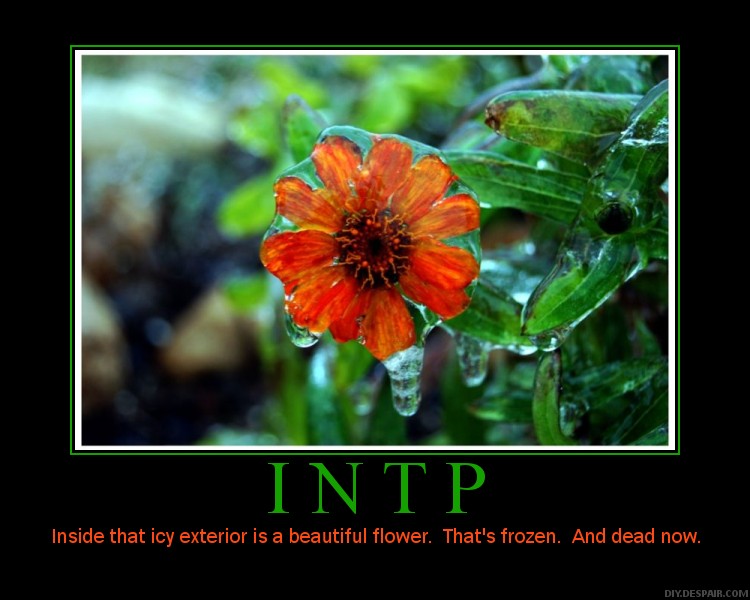
My personality type is INTP, which accounts for less than 6% of the female population. So when I say that I’m not a typical woman, I mean it; I’m not just trying to seem more interesting. Most women are ESFJ’s, making me the exact opposite of what everyone expects.

It’s the NT part that really makes me weird; intuitive yet detached. I firmly believe that there are at least three solutions to every problem, and if you can’t find the third one then you aren’t even trying. Self-sacrifice? Ha! I can find a way that will make everyone happy without any martyrs. Just watch me. Phishing for compassion is a waste of time, and I don’t care if you feel bad for me.

It freaks people out, because most of them have never met a woman like me. They want to stereotype and pigeonhole me, yet I never respond the way they expect me to. I am unpredictable and terrifying.

My personality type has frequently made me the target of bullying, and the general feeling of “I don’t belong with anyone, anywhere”, but despite that I’m enormously fond of it. I get a kick out of INTP memes, and I openly joke about my own “cold-hearted” nature. I have always prioritized being the sort of person *I* admire over pleasing anyone else, so at the end of the day I am satisfied with who I am without external approval. That’s what happens when you combine introverted with intuitive, thinking, and perceiving.

It is the reason why I write. I enjoy observation and introspection, and I see the philosophical value in every day life. I love the depth and complexity of human emotion, but I often approach it as something to be analyzed rather than swept away by.  I am, in many ways, a narrator rather than a character.

Who can tell a story better than a narrator?

INTP