About Writing

Sentence Length

I’ve done some groaning on this topic recently, so I figured that it wouldn’t be a bad idea to expound a little more. So, how long should sentences be?

Despite the ubiquity of Twitter-friendly writing in contemporary literature, even Pinterest advises against putting too many short sentences in a row. Why? Because they are monotonous and difficult to read.

However, the counter advice of using varying lengths also has the potential of being misused. If you think to yourself, “I have too many long sentences in this paragraph; I’m going to throw in a short one to spice things up!” STOP AND THINK AGAIN. Longer sentences can provide plenty of variety on their own, especially if you are skilled at using less common punctuation like semicolons or dashes. Learn the intricacies of grammar instead.

Unless you are a poetry master (or giving yourself a writing challenge for the fun of it), don’t try to default to any sort of formulas for sentence length (such as, long, long, short, medium). Don’t use short sentences for the sake of having short sentences. The human brain is smart enough to naturally pick up patterns across paragraphs, and using the same one over and over will become monotonous. Unfortunately, that monotony is also the reason why it’s easy to slip into following patterns in the first place — brains are lazy.

Instead, follow this rule of thumb: The more important the idea is, the more concise the sentence should be.

For example:

He was fucked.

Versus:

He was in the unfortunate position — and he had to admit that it was entirely his fault of finding himself in a dire situation.

The former conveys a sense of urgency and finality that the latter doesn’t possess, because the effect is softened by the use of more words. In the second sentence, we naturally expect the character to find a way out, despite his dire situation, because the urgency just isn’t there. However, there’s no arguing with the simplicity of the three words that compose the first sentence. He’s fucked, and that’s that.

Let’s do another example:

His eyes were blue, surrounded by aging skin that was creased with smile lines, which made them seem soft and friendly.

Versus:

His eyes were blue. They were surrounded by aging skin that was creased with smile lines, making them seem soft and friendly.

In the first sentence, the fact that this character’s eyes are blue matter less than the fact that they are soft and friendly, and the color might never be mentioned again. The point of this sentence is to give the reader a general idea of how this character looks.

In the second sentence, the character’s eyes are *blue*, and the reader subconsciously expects this emphasis to be important later on. Maybe they’re blue because he’s secretly an angel, or maybe someone will recognize him by his eyes after he’s been inflicted with amnesia, or something. This sort of emphasis is a subtle and effective form of foreshadowing. Cool, huh?

For the most part, read your writing out loud to hear how it sounds; you can even record yourself then play it back to get a better idea the flow. If you don’t like what you hear, fix it. Most of us read with an internal voice narrating to ourselves, and writers need to be mindful of that fact when they are plying their craft. That’s how you create something enjoyable.

Muse

Inspiration

tumblr_ofctzh6NAp1qk1m72o1_1280

Source


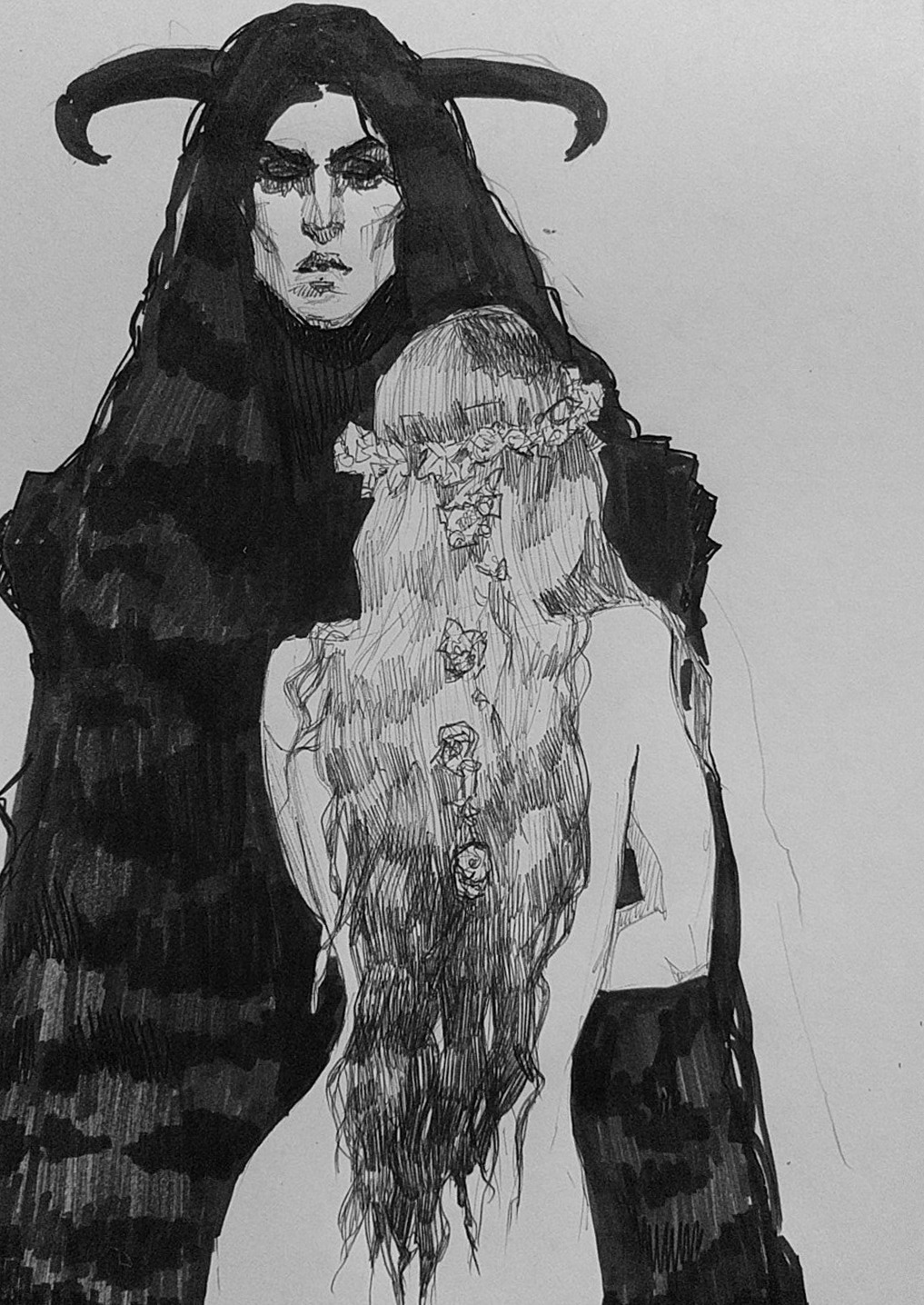
This picture reminds me of the main characters from my current WIP, metaphorically.

About Writing

Why I don’t read contemporary books

I’ve said repeatedly that I don’t read anything that was published this decade, because I’m a cranky bitch who hates everything about modern living … and all that. Hur hur.

I’m not doing this to be an irrational hater, but rather to analytically illustrate what I think is wrong with contemporary literature. At random, I have selected a paragraph out of a book titled, Meet Me at the Cupcake Cafe, because another blogger linked to it recently (hello!), and I think it serves as a good example of why I have dismissed this decade’s literature all together.

Disclaimer: I have not read this book, cannot review the quality of the story itself, and haven’t the slightest idea of what the writing is like outside of the preview available on Amazon. I have absolutely no opinion on the book itself; my complaint is with contemporary writing practices.

From the sample:

They both turned to look out of the window of the assisted living facility in north London. Issy had installed Joe there when it became clear he was getting too absentminded to live on his own. Issy had hated moving him down south after he’d spent his life in the north, but she needed him close to visit. Joe had grumbled of course but he was going to grumble anyway, moving out of his home to anywhere that wouldn’t let him rise at 5:00 a.m. and start pounding bread dough. So he might as well be grumpy close by, where she could keep an eye on him. After all, it wasn’t as if anyone else was around to do it. And the three bakeries, with their proud, shiny brass handles and old signs proclaiming them to be “electric bakers,” were gone now; fallen prey to the supermarkets and chains that favored cheap white pulp over handcrafted but slightly more expensive loaves.

First, for some unfathomable reason, authors have all decided that they have a raging allergy to commas. Maybe they think it’s more conversational, that commas are outdated and useless, or they simply never learned how to organize a sentence during their schooling; whatever the case, reading feels more like delving into an overgrown forest where one is expected to hack their way through alone. It also makes it significantly harder to read out loud, since being expected to run on and on without any pauses in one long unbroken sentence gives a monotone effect that can be really quite hypnotic … Woah, sorry, got sucked into the wrong dimension there for a moment.

The worst, in my opinion, is something that I think of as “THE TWITTER EFFECT.” You never, ever, not in a million years, see sentences longer than 280 characters (most will stay under 140, which was Twitter’s original cut off point), even in novels. Yes, I know that Moby-Dick was ridiculous for having sentences that spanned more than one page, but that doesn’t mean the answer is to only write short, choppy, status updates in lieu of actual paragraphs. I blame social media.

The longest sentence in the quoted paragraph is 258 characters, including the improperly used semicolon. Four of them are shorter than 100 characters, which accounts for more than half of the sentences in the paragraph.

So, let’s rewrite it. After all, if I’m going to claim that I can do better, I might as well back it up!

They both turned to look out of the window of the assisted living facility in north London, where Issy had installed her grampa Joe after it had become clear that he was getting too absentminded to live on his own. Issy had hated moving him so far from his home, but she had wanted him close by for her to visit, and they had no other family members who were willing to help take care of him. Joe had grumbled, of course, but he was sure to be grouchy anywhere that wouldn’t let him rise at 5:00 a.m. to start pounding dough, so he might as well be grouchy where she could keep an eye on him. The three bakeries of his past, with their proud, shiny, brass handles, and old signs proclaiming them to be “electric bakers”, were gone now, fallen prey to the supermarkets and chains that favored cheap, white pulp over handcrafted, yet slightly more expensive, loaves.

The length is the same, but I combined the seven sentences into four to decrease the choppy effect of countless periods, and enhance the overall flow of the story itself. I used a lot more commas for clear organization, and with any luck, you should be able to read that sucker out loud without stumbling. Give it a shot, and tell me if I’m wrong.

Thusly we have learned: Use commas and think longer thoughts, ’cause I ain’t got nothin’ to read.

I need a rest after writing this post. Whew.

Stories

Writing Prompt – Angels and Demons

It was a cruel twist of fate that landed me in the classifieds section, searching through the “roommate wanted” ads in hopes of finding someone that I could tolerate living with for at least a few months while I got my feet back under me. I’m not going to lie, in my heart I cursed God through the entire process.

I couldn’t say what it was about that ad in particular that drew my attention. The wording was the exact same as all the others, but it gave me a good feeling in my gut, so I went ahead and made the call. Given the urgency of my situation, I hurried through all the preliminaries over the phone, and settled on the move-in date for the next Saturday. I met my roommates for the very first time after I pulled up in my truck, loaded with the most precious of my possessions that I could salvage.

The first to greet me was a heavyset woman who introduced herself as Gabriel. She was warm and friendly, though a little more eager for physical contact than I was personally comfortable with, so I pulled my hands away and stepped back. She smelled strongly of brownies, and there was no doubt that baked desserts were a major part of her life. I wondered how I, myself, would fare if there was an endless supply of cakes and cookies around the kitchen.

She led me inside the house and showed me to my room, followed by the standard tour that ended with signing the lease on the living room coffee table. It was then that he appeared, taking me by surprise.

When Gabriel had pointed to his door, she had simply said, “This is Bub’s room,” which had inspired the mental image of a man built similarly to her, perhaps with a few tattoos to cover up a teddy bear personality, but my supposition had been wildly off base.

Bub was lean and muscular, as if he ate nothing but raw eggs for breakfast every single morning. He was clean cut, austere, and never once smiled, even when I called out hello and told him my name.

“I expect you to follow the rules,” he said sharply. “I won’t hesitate to evict you if you don’t, and I won’t feel bad about it after.”

I kind of liked him. He wasn’t the sort that would party as the trash piled up, and as long as I didn’t get in his way, he would leave me to my own devices.

“Oh, don’t mind him.” Gabriel laughed. “We like to be relaxed around here, as a ‘no judgment’ zone where everyone can feel safe.”

Bub’s eyes flashed angrily, and as he advanced on Gabriel I grew worried that I would soon be calling the police for domestic violence. His fists clenched, but his voice was quiet and calm as he said, “I don’t like to be undermined. I will continue to tolerate a great many vices from you, but I will not be dismissed and undermined. Rules are rules, and they will be followed.”

Gabriel was cowed. She giggled to cover it up, then asked if I needed help moving in. After I declined, she went straight for the kitchen. Bub, on the other hand, followed me out to my truck and began unloading boxes, his muscles flexing as he moved with ease.

“It’s disgusting,” Bub said. “Gabriel can’t say ‘no’ to anything, no matter what it is. She’s going to wind up dead with the way she’s going.”

“She seems like a nice person,” I said, not wanting to get in the middle of anything. My plan was to keep entirely to myself until the day I could return to living alone.

“All angels *seem* nice, until you actually get to know them. They have no self control at all.” He spat on the ground to emphasize his dislike.

“I’m sorry, what?” I wasn’t sure if I had heard Bub correctly. “Did you say angels?”

“Yes. Angels. Didn’t you know that Gabriel is one?”

“No!” I sputtered. “I didn’t know they existed.”

Bub’s smile grew wicked. “Did Gabriel tell you my full name?”

“She called you ‘Bub,’” I replied, feeling uncertain.

“It’s Beelzebub,” he said with glee. “*The* Beelzebub. Welcome to our home.”

He left me alone then, and for awhile I sat in the driver’s seat of my truck, thinking about what I had gotten myself into. I wondered if I should put the boxes back in the bed, turn the key in the ignition, and drive away to fight against fate in different location. However, as the sun began to turn the deep orange of late afternoon, I opened the door and continued moving into my room. I decided that maybe I wasn’t going to keep to myself over the next few months after all. Maybe fate had big plans for me, and I might as well see them through.


The original writing prompt on Reddit was:

You just met your new roommates Gabriel, an obese, glutoneous [sic] angel; and Beelzebub, a muscular, athletic demon. Turns out that angels who have never faced temptation are terrible at resisting it. On the other hand, demons who know nothing but temptation are masters of discipline.

I chose this particular prompt because I like angels and demons and it’s been a long time since I’ve written about them, even though the prompt is basically the plot to an anime called ‘Gabriel Dropout’. Since I have seen that anime, I was mindful to not rewrite it.

At the time I wrote this, the other responses defaulted to using college dorms as the setting. However, when I lived in California, the cost of living was so freakin’ high that all of us normal folk had to pool together just to afford rent, so I became acquainted with a number of people who still had roommates well outside of college (myself included). I decided to use this arrangement as my main premise, thus saving me from reliving the drudgery of school.

First person, because I like Lovecraft and copying his style allows me be vague about a number of things, thus saving me real life time. Seriously deep thinking behind that decision.

The question about whether Gabriel is a man or a woman depends on which spiritual circles you run with, since they go both ways. I like the stereotype of the cheerful, padded woman who’s always baking, so I went with that. Demons, on the other hand, never have any controversy about which sex they are, so Beelzebub is a man. I made him a bit scary, to keep with the common image of demons.

For the prompt, I wrote a basic set up with an open ending, and truthfully didn’t edit it past a second read-through. I’m currently working on a For Realz novel, so I want to devote most of my free time to that, rather than to the internet. This was just a bit of brain candy for the fun of it.

About Writing

My hope

I haven’t read more than a few pages of fiction novels published after 2010. That was the year the world became untenable for me, beginning with my inability to accept the popularity of skinny jeans and yoga pants. I cannot believe that anyone with functioning eyes can put on a pair of leggings, look in the mirror, and genuinely feel good about themselves. C’mon, you deserve better than that. You don’t have to treat yourself like crap just because everyone else is doing it.

As a Millennial, I keep my hopes up that one day we’ll explode on the scene and break all the molds. We’ll tell the publishing world in no uncertain terms that we demand better than 50 Shades of Grey, and crappy literature will vanish along with microwave dinners and Styrofoam cups. We can achieve so much more out of life than what the previous generations handed down to us.

I know what Millennials are capable of. I’ve seen plenty of brilliant short stories and creative ideas posted around the internet, but I have yet to find the officially published full length novels that are of the same quality. Maybe my peers have yet to realize the value of what they have to offer, and never work up the nerve to really throw it out there.

I know I’m not alone. I know you’re there.

Write with unhindered creativity, pour your love of English into every sentence, and do your best to hone your talent. Be artistic. Be real. Be different. Be you. Don’t rewrite Harry Potter and Twilight because they were popular, write the weird and quirky stories that you secretly post on Reddit. Just make them longer. A lot longer.

Self-publishing has become readily accessible to everyone, so you don’t have to follow the old channels of appeasement and rejection anymore — you can reach your readers directly. Don’t be afraid.

Join me, and we can change the literary world.

About Me

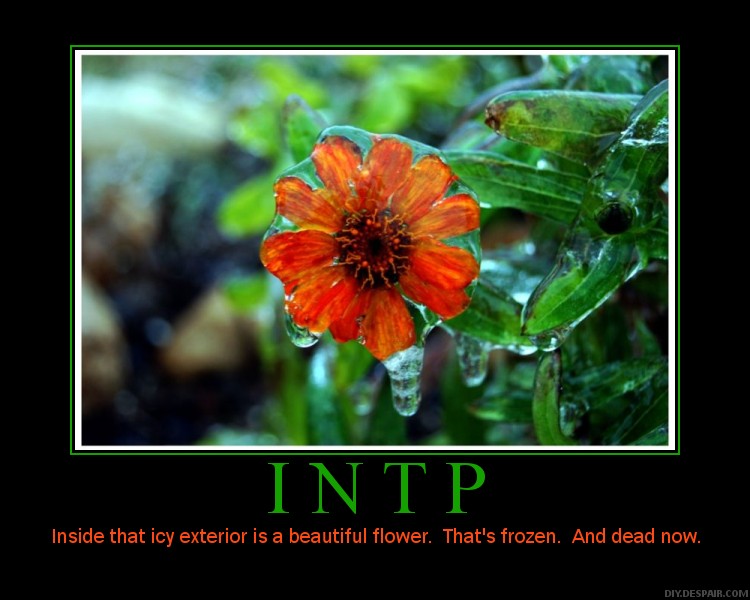
INTP

My personality type is INTP, which accounts for less than 6% of the female population. So when I say that I’m not a typical woman, I mean it; I’m not just trying to seem more interesting. Most women are ESFJ’s, making me the exact opposite of what everyone expects.

It’s the NT part that really makes me weird; intuitive yet detached. I firmly believe that there are at least three solutions to every problem, and if you can’t find the third one then you aren’t even trying. Self-sacrifice? Ha! I can find a way that will make everyone happy without any martyrs. Just watch me. Phishing for compassion is a waste of time, and I don’t care if you feel bad for me.

It freaks people out, because most of them have never met a woman like me. They want to stereotype and pigeonhole me, yet I never respond the way they expect me to. I am unpredictable and terrifying.

My personality type has frequently made me the target of bullying, and the general feeling of “I don’t belong with anyone, anywhere”, but despite that I’m enormously fond of it. I get a kick out of INTP memes, and I openly joke about my own “cold-hearted” nature. I have always prioritized being the sort of person *I* admire over pleasing anyone else, so at the end of the day I am satisfied with who I am without external approval. That’s what happens when you combine introverted with intuitive, thinking, and perceiving.

It is the reason why I write. I enjoy observation and introspection, and I see the philosophical value in every day life. I love the depth and complexity of human emotion, but I often approach it as something to be analyzed rather than swept away by.  I am, in many ways, a narrator rather than a character.

Who can tell a story better than a narrator?

INTP